The re-emergence of seasonal respiratory pathogens has complicated obstetric care following the transition of coronavirus disease 2019 to an endemic state. The study examined the epidemiological impact and pathogenetic characteristics associated with endemic viruses among pregnant women. A multicenter retrospective coh...
Motivated behaviors rely on dopaminergic signaling, which in turn depends on the correct folding and trafficking of receptors through the endoplasmic reticulum (ER). Within the ER, the AMPylase enzyme FICD acts as a molecular rheostat through its modification of the chaperone BiP, dynamically tuning the organelle’s res...
KJ Weaver, Benedict Abdon, B. Toth et al.· bioRxiv· 0 citations
Phenylalanine ammonia lyases (PALs) are an enzyme class of high synthetic utility as they catalyze the synthesis of chiral non-canonical phenylalanine amino acids from readily available cinnamic acids using simple ammonia as the amine donor. However, the applications of PAL in chemical manufacturing have been rare due...
M. Becker, Hsing‐I Ho, Michael J. Di Maso et al.· ChemRxiv· 0 citations
Functional RNA structures are typically far more dynamic than most proteins solved by cryo-electron microscopy (cryo-EM). Flexible junctions and weak tertiary contacts produce broad conformational ensembles, and cryo-EM particle classification analyses discard unaligned particles, which inherently contain the informati...
Debanjana Maji, Lars Dingeldein, Minhuan Li et al.· bioRxiv (Cold Spring Harbor...· 0 citations
Reach audiences
Advertise in front of researchers, engineers, and readers.
We used brain extracellular vesicle (EV) proteomics to identify protein responses to acute neuroinflammation and an EV-based microRNA intervention. Rats received vehicle, intracerebroventricular lipopolysaccharide (LPS), or LPS followed by an intravenous EV formulation containing anti-inflammatory microRNAs (miRNAs). B...
Kent Brown, Yingjie Wang, Zhying Shan et al.· bioRxiv (Cold Spring Harbor...· 0 citations
Gellan gum exhibits excellent gelation properties and is a valuable hydrocolloid in the food industry. Carbohydrate-binding modules (CBMs) are important tools for polysaccharide research, particularly as probes for in situ analysis. However, no gellan gum CBM has been reported. Herein, a CBM96 domain from a putative...
Kai-Meng Liu, Hong-Jan Su, Meng-Hui Sun et al.· Journal of Agricultural and...· 0 citations
T-cell acute lymphocytic leukemia (T-ALL) protein 1 (TAL1) is an important transcription factor in the specification of myeloid cells and positively regulates the differentiation of red blood cells. Aberrant, high-level expression of TAL1, mediated by insertions of short DNA sequences that recruit the transcription fac...
Matthew D. Gibbons, Jörg Bungert, Vincent Nganga et al.· Figshare· 0 citations
Circular RNAs (circRNAs) exhibit superior intrinsic stability and lower immunogenicity compared with linear RNAs, rendering them promising modalities for biomedical and biotechnological applications. Here, we establish the HARBOR (Human-Archaeal RNA Backbone for Overexpression of circular RNA) system, an engineered end...
Shi-Meng Cao, Xin Feng, J.Tian-Chang Zhang et al.· bioRxiv (Cold Spring Harbor...· 0 citations
Protein Quest: An Interactive Biochemistry Learning Challenge Description Protein Quest is an interactive, game-based educational resource designed to support undergraduate biochemistry education, particularly for students in medical, health sciences, and life sciences programs. The learning activity reinforces fundame...
Pálma Porrogi· Zenodo (CERN European Organi...· 0 citations
Externally imposed perturbations can subtly reshape protein structure and mechanics prior to the emergence of global unfolding signatures. Delineating locally sensitive zones, however, can pose immense challenges. Subjecting a small folded protein to isotropic pressure spanning 0.001 to 10 kbar, we develop a simplified...
Abstract The functioning of proteins is intimately linked to the conformational states they sample within the native ensemble. Generating ensembles from a single static structure is therefore a research domain receiving considerable attention. In this application note, we introduce Hashi, a pipeline to rapidly generate...
Harshavardhan Madhan, Athi N. Naganathan· Journal of Chemical Informat...· 0 citations
The immunoregulatory functions of Hsp90 are examined with a focus on autoimmune disorders, highlighting its role in disease-driving pathways, such as Nuclear Factor Kappa B (NF-κB), Janus Kinase/Signal Transducer and Activator of Transcription and Mitogen-Activated Protein Kinase (MAPK).
S. Scarneo, Robert Freeze, T. Haystead· Open Biology· 0 citations
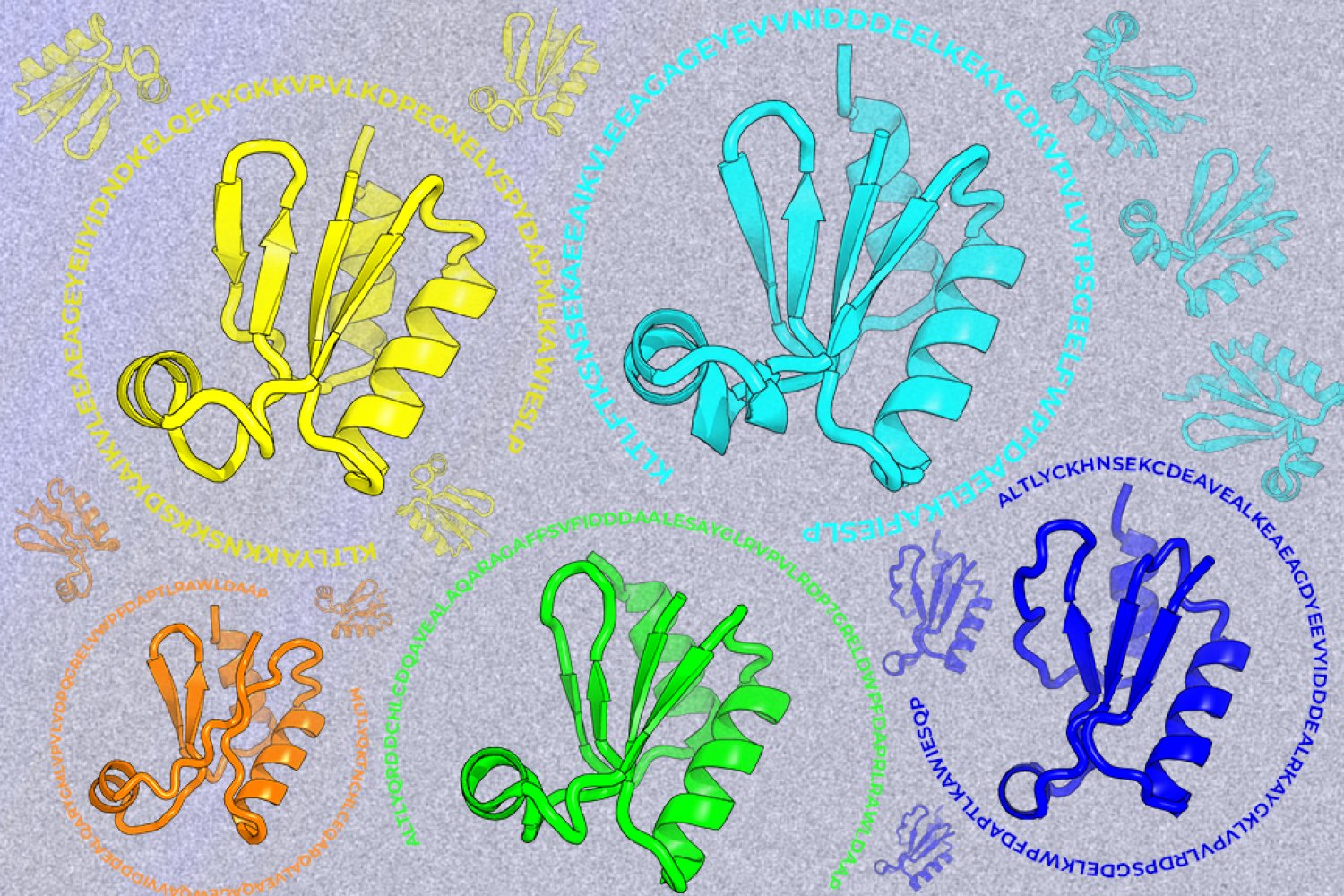
A new machine-learning framework aims to improve the success rate of computational protein design while moving away from results that reproduce sequences found in nature.