Background: Non-alcoholic fatty liver disease (NAFLD) is currently the most common chronic liver disorder and is closely linked to insulin resistance and the metabolic syndrome. Beyond the accumulation of triacylglycerides (TAG), disturbed hepatic cholesterol handling — mediated by the low-density lipoprotein receptor (LDLR), the lectin-like oxidised LDL receptor-1 (LOX-1), apolipoprotein E (ApoE) and LDL receptor-related protein 1 (LRP1) — has been proposed as a central pathogenetic mechanism. Objective: To evaluate the serum protein factors involved in triacylglyceride and cholesterol metabolism during the stepwise development of experimental fatty hepatosis. Methods: Fifty outbred white rats weighing 150–180 g were studied. Eight animals formed the intact group and received a standard vivarium diet; 42 animals received a high-fat diet (cow lard) supplemented with a 10% glucose–fructose solution (1:1) for 5 months. Serum was examined at 2, 3, 4 and 5 months. Total protein, albumin, bilirubin, urea, glucose, TAG, total cholesterol (TC) and cholesterol in very-low-density (VLDL-C), low-density (LDL-C) and high-density (HDL-C) lipoproteins were measured, and the atherogenic index (AI) together with ALT, AST, GGT and ALP activities were determined. Insulin, LDLR, LOX-1, ApoE and LRP1 were measured by sandwich enzyme-linked immunosorbent assay. HOMA-IR, the TAG/HDL-C ratio and the metabolic index (MI) were calculated. Results: High-calorie feeding produced a progressive increase in serum TAG (up to 2.11-fold) and TC (up to 1.93-fold), a rise in VLDL-C (up to 2.96-fold) and LDL-C (up to 4.19-fold) and a fall in HDL-C, with the AI increasing from 0.66 ± 0.03 to 3.66 ± 0.28 (5.54-fold; P < 0.001). Glucose rose 1.49-fold, insulin 2.73-fold and HOMA-IR 3.13-fold by month 5. Serum LDLR fell progressively (2.41-, 3.34- and 4.89-fold at 2, 3 and 4 months, with partial recovery to a 3.61-fold reduction at 5 months), whereas LOX-1 rose (1.63-, 2.03-, 2.18- and 1.94-fold). ApoE showed a biphasic pattern: a 1.52-fold decrease at 2 months followed by a rise above intact values at 4 (1.32-fold) and 5 months (1.23-fold). LRP1 was unchanged at 2 months and then decreased by 1.25-, 1.40- and 1.43-fold. Conclusion: Prolonged high-calorie feeding reproduces fatty hepatosis accompanied by the full biochemical picture of the metabolic syndrome. The progressive decline of LDLR together with a rise in LOX-1, a biphasic ApoE response and a gradual reduction of LRP1 indicate a dysregulation of receptor-mediated hepatic cholesterol handling and suggest that these proteins merit further evaluation as early markers of fatty hepatosis.
Jahongir Kh. Tursunov, Ulugbek Z. Zaribbaev, Abdurakhmon Abduvaliev et al.· International Journal of Med...· 0 citations
Intrinsically disordered regions (IDRs) mediate protein interactions through poorly understood mechanisms. We studied the retinoblastoma protein (pRb) and its interaction with the SV40 Large T antigen (LTSV40), a viral oncoprotein that displaces E2F factors. Using molecular dynamics and umbrella sampling, we show the LTSV40 LXCXE motif is part of a conserved Order–Motif–IDR architecture. The ordered N-terminal region drives initial pRb recognition via induced folding, adding over 6 kcal/mol to affinity. Simultaneously, the C-terminal IDR undergoes a bent-to-extended transition, sterically occluding the pRb AB cleft to prevent E2F binding. These coupled phenomena are evolutionarily conserved across 14 polyomaviruses, as confirmed by AlphaFold and MobiDB, suggesting a common pRb inactivation strategy. These results highlight a broader challenge for the field: functionally decisive IDR behaviors such as binding-induced folding and steric occlusion are not yet representable within current interaction data models, even when complementary evidence exists in resources such as DisProt or MobiDB. Bridging this gap through systematic integration of IDR annotations into databases such as IntAct and Complex Portal, supported by projection onto AlphaFold3-predicted complex structures, would enable community-scale identification of complexes where disorder is mechanistically decisive. ECCB 2026 online poster platform
Carla Luciana Padilla Franzotti, Nicolás Palópoli, Gustavo Pierdominici‐Sottile et al.· Zenodo (CERN European Organi...· 0 citations
Intrinsically disordered regions (IDRs) mediate protein interactions through poorly understood mechanisms. We studied the retinoblastoma protein (pRb) and its interaction with the SV40 Large T antigen (LTSV40), a viral oncoprotein that displaces E2F factors. Using molecular dynamics and umbrella sampling, we show the LTSV40 LXCXE motif is part of a conserved Order–Motif–IDR architecture. The ordered N-terminal region drives initial pRb recognition via induced folding, adding over 6 kcal/mol to affinity. Simultaneously, the C-terminal IDR undergoes a bent-to-extended transition, sterically occluding the pRb AB cleft to prevent E2F binding. These coupled phenomena are evolutionarily conserved across 14 polyomaviruses, as confirmed by AlphaFold and MobiDB, suggesting a common pRb inactivation strategy. These results highlight a broader challenge for the field: functionally decisive IDR behaviors such as binding-induced folding and steric occlusion are not yet representable within current interaction data models, even when complementary evidence exists in resources such as DisProt or MobiDB. Bridging this gap through systematic integration of IDR annotations into databases such as IntAct and Complex Portal, supported by projection onto AlphaFold3-predicted complex structures, would enable community-scale identification of complexes where disorder is mechanistically decisive. ECCB 2026 online poster platform
Carla Luciana Padilla Franzotti, Nicolás Palópoli, Gustavo Pierdominici‐Sottile et al.· Zenodo (CERN European Organi...· 0 citations
CIR-DDG, a lightweight residual adapter that combines a fixed base prediction with 22 interpretable descriptors of cross-chain distance, contact density and site--partner context, is introduced, showing that the learned geometric correction generalizes beyond SKEMPI thermodynamic measurements.
Weizhen Yu, Zhi-Heng Zou, Yong-Gui Huang et al.· 0 citations
Reach audiences
Advertise in front of researchers, engineers, and readers.
This work reviews the computational and experimental approaches that disentangle folding and function at scale, revealing a dark energy component and providing new insights into how biological information flows from sequence to structure to function and back to sequence.
Ezequiel A. Galpern, Federico Caamaño, Ignacio E. Sánchez et al.· 0 citations
The current work highlighted the potential of polymer-based excipient systems for developing high-concentration injectable suspensions of proteins and their combinations on the viscosity, injectability, and stability.
Unknown authors· International journal of pha...· 0 citations
Endothelial DANCR deficiency promotes atherosclerotic plaque instability through activation of the RPL22/p53 pathway, suggesting DANCR as a potential protective factor and therapeutic target in atherosclerosis.
Unknown authors· Journal of Advanced Research· 0 citations
This research investigates the potential role of quantum entanglement in biological information processing. We explore the feasibility of simulating quantum effects within biological molecules and examining the influence of entanglement on fundamental processes such as DNA sequence recognition and protein folding. The core claim centers on demonstrating how entanglement could provide a mechanism for enhanced computational capabilities within biological systems. This work contributes to the emerging field of quantum biology by proposing a novel framework for understanding biological phenomena through the lens of quantum mechanics, specifically focusing on the emergent properties of entanglement. The theoretical analysis presented here lays the groundwork for future experimental investigations and offers a new perspective on the complexities of life.
Jincheng Zhang· Zenodo (CERN European Organi...· 0 citations
Predicting protein three-dimensional structures from their amino acid sequences remains a grand challenge in computational biology. Traditional methods have struggled to accurately capture the complex, long-range interactions that govern protein folding. This work proposes a novel approach utilizing Graph Neural Networks (GNNs) to address this challenge through a fragment assembly paradigm. We hypothesize that proteins can be effectively predicted by learning to assemble smaller, interacting fragments based on their local structural characteristics. Our GNN learns to represent individual protein fragments as graphs, capturing their local interactions via node features (amino acid types, residue connections) and edge features (distances, angles). The network then predicts the optimal assembly order of these fragments, ultimately generating a predicted protein structure. This approach avoids the need for explicit conformational search and leverages the powerful representation learning capabilities of GNNs. We demonstrate the feasibility and potential of this approach, outlining a framework for future development and exploration.
Jincheng Zhang· Zenodo (CERN European Organi...· 0 citations
This record contains the code-associated data and figures for "Tensor-based Approximation of Molecular Kinetics: Generator Learning, Reaction Coordinates and Incremental Updating". It provides the precomputed data, results, and figures behind four case studies: a 3D Lemon-Slice toy system, and molecular dynamics trajectories of the fast-folding proteins Chignolin (CLN025) and NTL9. Each case study demonstrates a tensor-train (TT) based approach to gEDMD (generator Extended Dynamic Mode Decomposition) for estimating the generator of molecular dynamics, including comparisons against a dense reference method, PCCA+ soft-state assignment, an incremental TT-SVD update scheme, and truncation/bandwidth sensitivity studies. The corresponding code is available at: https://github.com/fnueske/tensor_gedmd
Feliks Nüske, Peter Benner, Minakshi Verma· Zenodo (CERN European Organi...· 0 citations
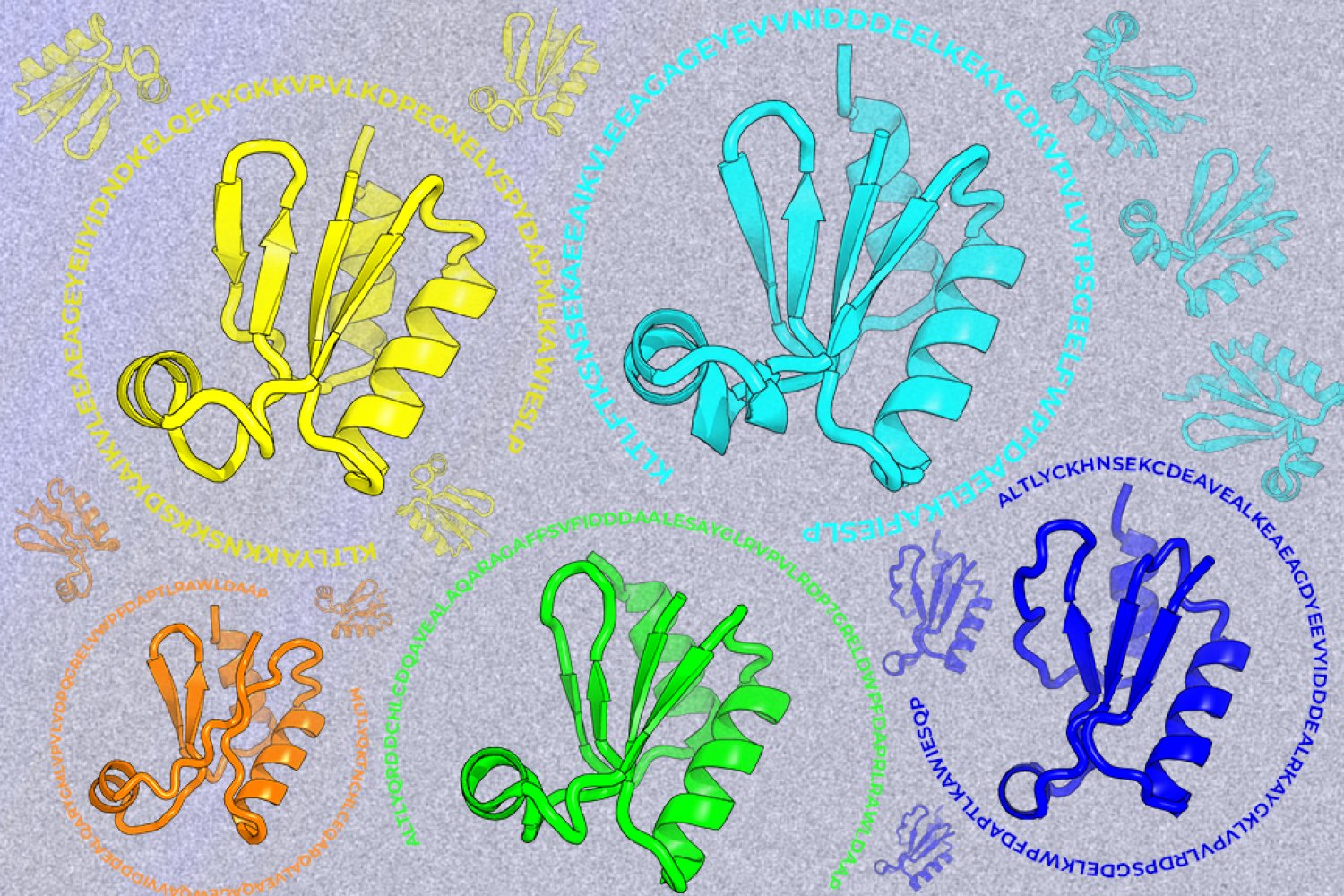
A new machine-learning framework aims to improve the success rate of computational protein design while moving away from results that reproduce sequences found in nature.