Skip to content

Category

protein folding

257 papers

#graph neural networks Open access Aug 2026

Graph Neural Networks for Protein Structure Prediction

Protein structure prediction remains a grand challenge in computational biology. Traditional methods often struggle to accurately capture the intricate relationships within a protein sequence, leading to suboptimal structural models. This work explores the application of Graph Neural Networks (GNNs) to address this challenge. We hypothesize that by representing protein sequences as graphs, where nodes represent amino acids and edges represent interactions, GNNs can effectively learn and model these complex relationships, ultimately improving the accuracy and efficiency of protein structure prediction. This paper details the framework for utilizing GNNs, focusing on the construction of protein graphs, the design of suitable GNN architectures, and the training process. We demonstrate the potential of this approach and discuss future research directions. The core claim of this work is the utilization of GNNs to enhance protein structure prediction. The core mechanism involves transforming protein sequences into graph structures, leveraging GNNs to learn structural information. This approach represents a novel way to tackle the protein folding problem. ---

Jincheng Zhang · 0 citations
#protein folding Open access Aug 2026

LemonCatcher Acidic Pull-Down Enables Selective In-Cell Hydrogen-Deuterium Exchange Mass Spectrometry

LemonCatcher is created, a protein superglue that spontaneously forms an amide bond to the LemonTag peptide under these harsh acidic and cold quench conditions, even at -20 °C, and SelQueX makes possible selective characterization of protein structural dynamics within the complex cellular milieu.

Dietmar Hammerschmid, Mahjoobeh Eshani, A. H. Keeble et al. · 0 citations
#protein folding Review Open access Aug 2026

Minimal-alphabet proteins by evolution, engineering, and design.

How solid-phase peptide synthesis, genetically encoded libraries, and high-throughput selection and screening enable systematic exploration of vast, noncanonical landscapes largely inaccessible to traditional engineering is discussed.

Filip Buchel, V. G. Giacobelli, K. Hlouchová · 0 citations
#protein folding Open access Aug 2026

Mutually exclusive pathways for biosynthesis of polyamine homospermidine dependent on putrescine or agmatine.

This study highlights a new role for agmatine in bacterial polyamine biosynthesis, which also includes the N1-aminopropylagmatine and carboxyaminopropylagmatine pathways for spermidine production.

Bin Li, Hamid R Baniasadi, Jue Liang et al. · 0 citations
#protein folding Review Open access Sep 2026

Organelle network dysfunction in primary cardiomyopathy: An integrated perspective on pathogenesis and therapeutics.

Treating primary cardiomyopathy as a 'organelle network disease', in which organelles constitute a dynamic, interdependent ecosystem, provides a useful integrative paradigm for comprehending the causes.

Shi-Xin Pu, Pan Yang · 0 citations
#protein folding Case report Open access Aug 2026

Musculoskeletal (Mal)adaptations in Response to a > 30 000-km Running Challenge.

BACKGROUND Ultra-endurance sports are increasingly popular, yet the long-term physiological consequences of sustained extreme training loads remain poorly understood. In particular, the effects of prolonged ultra-endurance exercise on skeletal muscle structure, function and molecular remodelling are largely unknown. This case study examined a highly experienced ultra-endurance athlete who completed a world-record attempt to run 30 300 km, with extensive phenotyping focusing on skeletal muscle adaptations and recovery. METHODS A 49-year-old male athlete (172 cm, 65 kg) ran ~70 km daily for 15 months. Musculoskeletal, cardiac and visceral ultrasonography, leg muscle strength and power measurements were performed before and after the challenge. Muscle biopsies (n = 4) from vastus lateralis were obtained immediately after completion and during 17 months of recovery to assess myosin heavy chain (MHC) composition, mitochondrial electron transport chain (ETC) complexes and proteins involved in mitochondrial turnover, autophagy and inflammation. Body composition, haematological and biochemical markers, and gut microbiota composition were monitored longitudinally. RESULTS The athlete ran 30 300 km over 444 days, maintaining a daily distance of ~70 km despite substantial musculoskeletal discomfort, including a tibial stress reaction mid-challenge, which resolved gradually with continued running. Body mass decreased by ~3 kg, primarily reflecting fat loss (~83%), accompanied by reductions in muscle thickness, maximal strength and power. Circulating creatine kinase (3-15-fold), oxidative stress markers (~50%) and GDF8 (~10%-50%) were sustainedly increased, whereas IGF-I decreased (~10%-40%), suggesting a reduced anabolic environment during the challenge. Muscle biopsy analyses revealed a progressive recovery of mitochondrial function during the 17 months following the challenge, as evidenced by a progressive increase in ETC protein abundance and the expression of regulators of mitochondrial dynamics and quality control (MFN2, PARKIN, DRP1). In contrast, markers of autophagy, apoptosis and inflammation were decreased during the 17-months post-challenge (LC3A/B-I by ~50%, CASP3 by ~60% and NF-κBSer536 by ~20%). Muscle fibre composition showed extreme predominance of slow fibres (nearly 100% MHC-I), which persisted during recovery. Most molecular and functional alterations gradually resolved within 10-17 months. Gut microbiota diversity increased during the challenge, with enrichment of Bifidobacterium during running and Akkermansia during recovery. CONCLUSIONS Sustaining daily ultrarunning for more than 1 year induces substantial skeletal muscle remodelling, including reduced muscle size, impaired contractile function and mitochondrial maladaptations, despite largely preserved endocrine and haematological stability. These findings highlight skeletal muscle as a primary physiological system challenged during extreme endurance exercise and demonstrate that recovery from such perturbations may require more than one year.

Tomas Venckūnas, T. Chaillou, L. Cesanelli et al. · 0 citations
#protein folding Open access Aug 2026

Engineered exosomes with RNA‐motif short hairpin RNA loading and Rab4‐boosted production enable controlled ferroptosis in endometrial carcinoma

New insights into the precision treatment of endometrial cancer are provided by developing engineered, multifunctional, exosome-based therapeutic drugs that combine mechanism precision and translational feasibility in tumor treatment.

Jiarui Zhang, Yu-Wei Yao, Wan Shu et al. · 0 citations
#protein folding Open access Aug 2026

Pegylation modulates ApoE association and hepatic accumulation of DC-Chol-based nanoparticles through steric exclusion.

Findings indicate that PEGylation reduces ApoE association primarily through steric exclusion and highlight PEGylation as a useful strategy for modulating nanoparticle biodistribution.

Mitra Hosseini-Kharat, Anthony D. Wignall, Bradley Chereda et al. · 0 citations
#protein folding Case report Aug 2026

Vaso-occlusive crisis in the cervicofacial region in sickle cell anemia.

BACKGROUND Sickle cell anemia (SCA) is an autosomal recessive disorder characterized by a point mutation in the β-globin chain of the hemoglobin protein, causing abnormal folding. This can lead to sickling of red blood cells, agglutination, and ultimately vascular obstruction, which rarely occurs in the cervicofacial region. CASE DESCRIPTION This report reviews a rare case of vaso-occlusive crisis (VOC) in the cervical vertebrae and mandible, manifesting as severe mandibular pain of unknown origin in a patient with SCA. The patient experienced diffuse body pain, 3 days in duration, and most prominent in the right hemimandible. Symptoms were refractory to hydration and analgesics, requiring intensive care unit admission. Jaw pain persisted, and magnetic resonance imaging of the face was significant for enhancement in the right posterior hemimandible with surrounding soft-tissue inflammatory changes. Differential diagnoses included osteonecrosis, osteomyelitis, odontogenic infection, extramedullary hematopoiesis, and VOC. The patient lacked signs and sequelae of infection or hematopoiesis; therefore, the pain was attributed to bone infarcts secondary to VOC. The patient was placed on a multimodal analgesic regimen with resolution of symptoms and was discharged in stable condition. PRACTICAL IMPLICATIONS This case illustrates an unusual manifestation of severe jaw pain of unknown origin that was determined to be caused by VOC of the mandible. This highlights the need for dentists to understand SCA pathophysiology and their integral role in the diagnosis of atypical facial pain in patients with SCA. Dentists may be the first to recognize manifestations of SCA, emphasizing their role in patient education and interdisciplinary care.

B. M. Will, Justin J. Pratt, A. Famuyide et al. · 0 citations
#protein folding Open access Aug 2026

Learning precise segmentation of neurofibrillary tangles from rapid manual point annotations

A scalable, open-source, deep-learning approach to quantify NFT burden in digital whole slide images (WSIs) of post-mortem human brain tissue and openly releases this multi-institution deep-learning pipeline to provide detailed NFT spatial distribution and morphology analysis capability at a scale otherwise infeasible by manual assessment.

S. Ghandian, Liane Albarghouthi, Kiana Nava et al. · 0 citations

From tech blogs

See all →
MIT News · Artificial Intelligence Aug 27, 2026

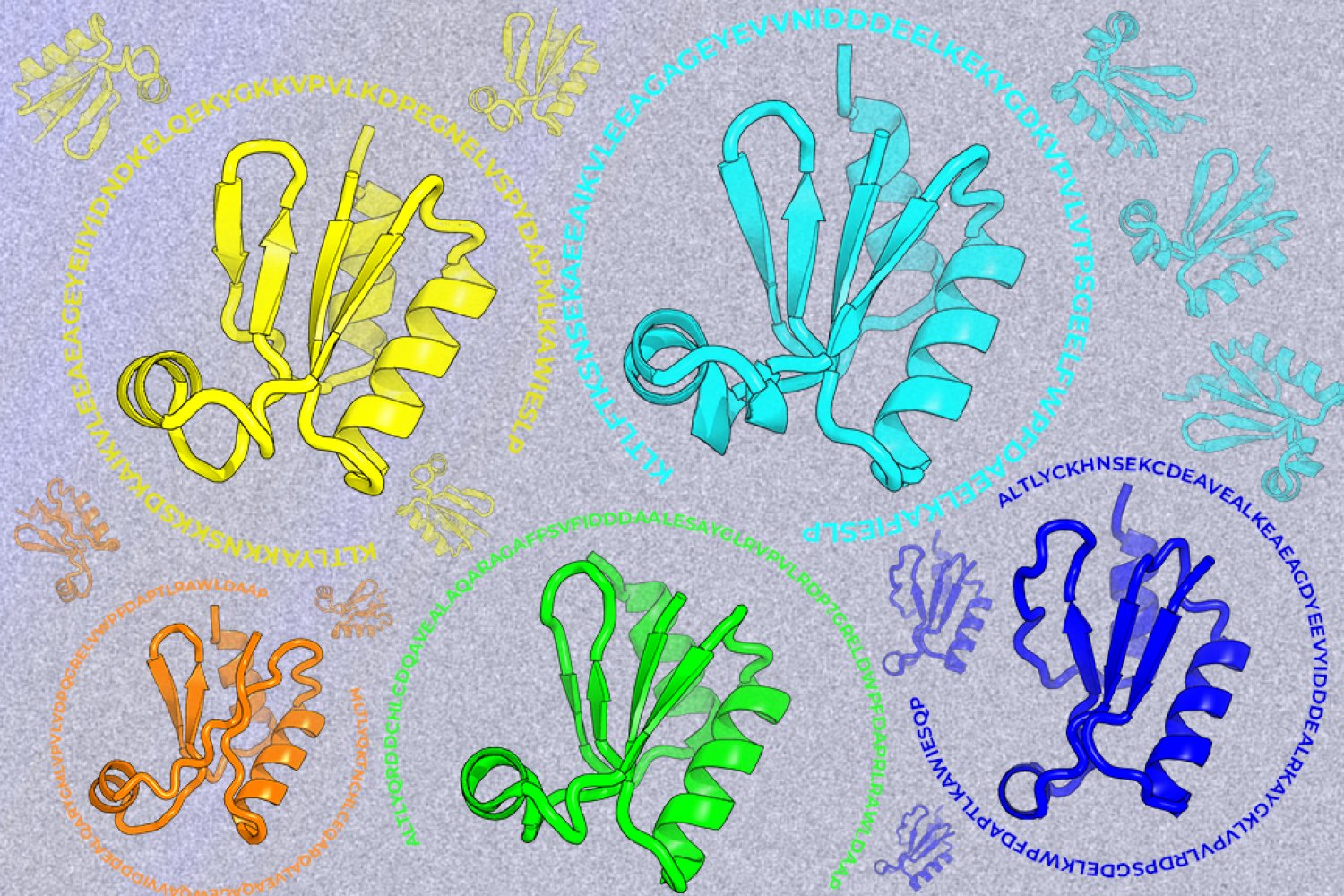
Looking beyond natural sequences

A new machine-learning framework aims to improve the success rate of computational protein design while moving away from results that reproduce sequences found in nature.


Google DeepMind Blog Nov 25, 2025

AlphaFold: Five years of impact

Explore how AlphaFold has accelerated science and fueled a global wave of biological discovery.