Skip to content

Category

protein folding

257 papers

#protein folding Open access Aug 2026

Tree-aware conditional language modeling recovers mutational patterns of viral evolution

EvoPLM-Tree, a tree-aware conditional autoregressive language model that predicts descendant protein sequences from ancestral sequences together with phylogenetically derived evolutionary features, provides a framework for modeling protein evolution along phylogenetic lineages and prioritizing plausible future mutations from genomic surveillance data.

Polina V. Polunina, Wolfgang Maier, Alan F. Rubin · 0 citations
#protein folding Open access Aug 2026

Multi-knockout of 29 phytotoxic proteins and metabolites does not completely abolish virulence of the necrotrophic fungus Botrytis cinerea

This work demonstrates that necrotrophic pathogenesis in B. cinerea does not depend on a few primary virulence determinants, but rather on a highly redundant network of host damaging factors.

N. Safari, P. Pattar, M. Magomedov et al. · 0 citations
#protein folding Open access Aug 2026

Novel Eukaryotic Double Histone Fold Motifs Sharing High Sequence Identity with Histones H3 and H4 in Single-Domain Proteins and in Proteins Featuring Remarkable Histone Fold Multiplets.

Histone proteins play a central role in chromatin organization. In eukaryotes, the fundamental units of DNA packagingthe nucleosomal coresare assembled from histone dimers. The double histone fold (DHF) refers to a protein architecture in which two adjacent regions, each containing a histone fold, associate to form a histone pseudodimer. In the present study, by targeted sequence searches in protein databases and subsequent structural and phylogenetic investigations, we identified a large number of DHF proteins featuring a high or very high degree of identity with the amino acid sequences of both histones H3 and H4, which constitute a new class of eukaryotic DHF proteins. Strikinglysomehow in analogy with recently identified proteins encoded in some giant viruseswe found, as well, triplets of various kinds (i.e., proteins showing regions of homology with histones H3, histone H4, and an additional histone fold). We were also able to evidence the existence of unprecedented quadruplets encompassing two distinct DHF domains, as well as multiplets that include not only region of homology to nucleosome core histones, but also to the linker histone H1. Focus was put on the evolutionary scenarios for the origin of the newly identified proteins, as well as on the conservation of residues relevant for dimerization and DNA binding. Implications of our findings in fundamental areas of biochemistry are illustrated, and perspectives for future research directions are discussed.

Anna Ranaudo, Toshiko Miyake, Haidi Shehi et al. · 0 citations
#protein folding Aug 2026

PRDX1 drives colorectal cancer progression and immune microenvironment remodeling by facilitating PRMT5 nuclear translocation to activate Wnt/β-catenin signaling.

Hyperactivation of Wnt/β-catenin signaling drives colorectal cancer (CRC) progression and contributes to an immunosuppressive tumor microenvironment. Although peroxiredoxin-1 (PRDX1) is overexpressed in CRC and correlated with poor prognosis, its mechanistic role in Wnt/β-catenin-mediated immune evasion remains unclear. Through transcriptomic sequencing and co-immunoprecipitation, we identified PRDX1-interacting proteins and validated their functional roles via luciferase assays, mutagenesis, and pharmacological approaches in syngeneic models. Results demonstrated that PRDX1 knockout attenuated Wnt/β-catenin signaling in AOM/DSS-induced CRC mice. In cellular models, PRDX1 knockdown inhibited nuclear translocation of β-catenin by promoting its ubiquitination. Mechanistically, PRDX1 functions as a redox-sensitive chaperone that interacts with protein arginine methyltransferase 5 (PRMT5) in the cytoplasm and facilitates its nuclear translocation. This was associated with increased H3R2me2 and H3R8me2 levels, upregulation of DVL3 transcription, and subsequent Wnt/β-catenin activation. The interaction was abrogated by disrupting the Rossmann-fold or β-barrel domains of PRMT5, or by introducing the R368A catalytic mutation, suggesting that these domains are important for the PRDX1-PRMT5 association. Importantly, pharmacologically inhibiting PRMT5 suppressed PRDX1-driven tumor growth and alleviated immunosuppression in vivo by dampening Wnt/β-catenin signaling. These findings identify a novel PRDX1-PRMT5 axis that activates Wnt/β-catenin signaling, highlighting a potential therapeutic strategy for CRC by targeting this pathway to suppress tumor progression and remodel the immune microenvironment.

Nianhua Yu, Xi Li, Jinli Han et al. · 0 citations
#protein folding Aug 2026

Structural basis of Saccharomyces cerevisiae Mba1 in mitochondrial co-translational membrane insertion.

Co-translational membrane insertion is essential for the efficient integration of mitochondrially encoded proteins into the inner mitochondrial membrane (IMM) and is critical for respiratory chain biogenesis. Mba1 is a mitochondrial ribosome-associated protein implicated in coupling mitochondrial translation with inner-membrane protein biogenesis, but its structural basis of function remains poorly understood. Here, we determined the solution structure of mature Saccharomyces cerevisiae Mba1 (mMba1) using multidimensional nuclear magnetic resonance (NMR) spectroscopy. The structure reveals a compact α + β fold with a central hydrophobic cavity and distinct charged surface regions. Ribosome titration, paramagnetic relaxation enhancement, and Cox2-derived peptide titration identified several regions of mMba1 that are affected by these different interaction conditions. Mapping these regions onto the structure reveals spatially distinct surfaces that may contribute to ribosome association, membrane proximity, and interactions with hydrophobic peptide segments. These findings provide a structural framework for interpreting previous functional studies of Mba1 and support a working model in which Mba1 may function as a peripheral adaptor at the mitoribosome-inner membrane interface. Further structural and biochemical studies will be required to establish the molecular mechanisms underlying these interactions.

Jing Yang, M. Ruan, Dong-Shuai Bai et al. · 0 citations
#protein folding Aug 2026

Structural and energetic landscape of the human HOP-PrPC Axis: Multi-domain stabilization and peptide-mediated disruption by melittin.

The heat shock protein 70 (HSP70)-HSP90 organizing protein (HOP), also known as STIP1, is a vital co-chaperone that mediates the transfer of oncogenic client proteins between HSP70 and HSP90. While HOP's canonical role as a co-chaperone involves coordinating HSP70 and HSP90 activity to facilitate the folding, maturation, and stabilization of selected oncogenic client proteins, the interaction between HOP and the cellular prion protein (PrPC) has recently emerged as a significant driver of tumor progression, metastasis, and the maintenance of cancer stem cell characteristics. This study utilizes an integrated computational pipeline, including molecular docking and extensive molecular dynamics (MD) simulations with a cumulative sampling time approaching 1.5 μs, to provide the first comprehensive structural roadmap of the human HOP-PrPC interaction. Our results elucidate a hierarchical binding mechanism where the PrPC protein initially targets the TPR2A domain of HOP with a binding affinity of -88.01 ± 10.88 kcal/mol, subsequently recruiting the TPR2B and DP2 modules to achieve a high-affinity "locked" state of -152.38 ± 29.79 kcal/mol. Critical interface hotspots were identified at HOP residues Leu187 and Pro211 via saturation mutagenesis. Furthermore, we evaluated the inhibitory potential of repurposed small molecules and the amphipathic peptide Melittin. While the FDA-approved drug Tarceva (Erlotinib) restricts PrP engagement to the TPR2A domain by inducing structural compaction in HOP, Melittin emerged as a superior inhibitor. Melittin binding at the TPR1-TPR2A interface triggers the complete physical detachment of the PrPC peptide. Furthermore, against the full-length PrPC protein, Melittin dismantling the multi-domain 'locked' state and causes a drastic reduction in binding affinity, restricting the protein almost entirely to the TPR2A domain. These findings demonstrate that the conformational plasticity of HOP can be strategically exploited for targeted protein-protein interaction (PPI) disruption in cancer therapy.

Gagandeep Singh, T. Chaudhuri · 0 citations
#protein folding Aug 2026

Characterization of hemp seed oil-carnauba wax oleogel and the effect of oleogel usage and hemp seed flour substitution on the properties of wheat flour crackers.

This study investigated the potential use of hemp seed oil-carnauba wax oleogel as a margarine substitute in crackers and the effects of substituting wheat flour with hemp seed flour. Characterization revealed that 11% wax oleogel best mimicked margarine. Control crackers contained margarine (C1) and oleogel (C2). Wheat flour in C2 was substituted with 10% (HSF10) and 20% (HSF20) hemp seed flour. Oleogel increased unsaturated fatty acids by 76.84%. Although oleogel restricted the spread ratio, hemp seed flour increased it. HSF20 enhanced the protein, ash, and fat by approximately 1.4-fold and fiber by 5.68-fold compared to C1. Hemp seed flour reduced fat migration and increased the phenolics and antioxidant activity by >2-fold, controlling lipid oxidation. Sensory analysis showed no significant differences in taste/odor among samples, but C2, HSF10, and HSF20 received higher scores for chewiness. These findings highlight improvements in the crackers' nutritional, oxidative, and bioactive properties without compromising sensory taste.

Fundagül Erem, Mukarrem Kırşanu, Emine Yılmaz Can · 0 citations
#protein folding Open access Aug 2026

The fibrocystin C-terminal domain inhibits Src/STAT3 signal induced cystogenesis of kidney epithelial cells.

Autosomal recessive polycystic kidney disease (ARPKD) is caused by impaired function of fibrocystin/polyductin (FPC) in collecting duct epithelia resulting in cyst formation. We hypothesized that the membrane-bound C-terminal FPC domain (FPCct) is necessary to suppress cystogenesis and facilitate epithelial homeostasis. In ARPKD, cystic kidney epithelia are characterized by a secretory phenotype associated with high intracellular cAMP levels and enhanced STAT3-dependent transcription. Moreover, impaired FPC function may lead to enhanced activation of Src tyrosine kinase, thereby activating STAT3 signaling and its downstream transcriptional activity. To investigate the effects of FPC loss on the cystic epithelial cell phenotype, we used an established principal-like MDCK cell line (pl-MDCK) and studied monolayers in both two and three-dimensional culture. In this in vitro model of collecting duct epithelia, FPC-deficient cells showed two-fold elevated basal cAMP levels and enhanced apical secretion leading to three-fold higher luminal pressure. Forskolin-stimulated elevation of cAMP levels triggered enhanced Src-dependent activation of STAT3 resulting in a pronounced cystic phenotype. Notably, expression of wildtype FPCct reduced both STAT3-dependent transcription and the secretory phenotype in knockout epithelial cells. Our data suggest that FPCct interacts with Src kinase at the plasma membrane, thereby reducing Src-mediated STAT3 phosphorylation and limiting STAT3-dependent transcription. Thus, FPCct appears to act like a physiological suppressor of cystogenic signaling, as found in healthy kidney epithelia, that is essential for maintaining epithelial homeostasis. Protein constructs that restore FPC C-terminal function may offer a therapeutic lead to mitigate epithelial dysfunction and slow disease progression in ARPKD.

F. Hassan, Susanne T. Hahnenstein, A. Kraus et al. · 0 citations
#protein folding Open access Aug 2026

Structural insights into Cas9 inhibition by AcrIIA17 via bridge helix interaction

Summary Anti-CRISPR (Acr) proteins have evolved in bacteriophages and mobile genetic elements to counteract CRISPR-Cas immune systems through diverse inhibitory mechanisms. Here, we present the crystal structure of AcrIIA17 and elucidate its mechanism of Staphylococcus aureus Cas9 (SauCas9) inhibition. AcrIIA17 adopts a previously uncharacterized protein fold and exists as a monomer in solution. Biochemical analyses reveal that AcrIIA17 inhibits SauCas9 activity in a strictly order-dependent manner, effectively suppressing DNA cleavage only when it engages Cas9 prior to single guide RNA (sgRNA) loading, whereas pre-assembled Cas9-sgRNA ribonucleoprotein (RNP) complexes are resistant to inhibition. Domain-mapping experiments demonstrate that AcrIIA17 directly binds to the bridge helix (BH) domain of SauCas9, and structure-guided mutagenesis confirms that this interaction is essential for its inhibitory function. Together, our findings identify AcrIIA17 as an Acr protein that targets the Cas9 BH domain and reveal the BH domain as a regulatory checkpoint in Cas9 activation.

G. Kim, Hyo Been Jin, Yong-Jun Kang et al. · 0 citations
#protein folding Open access Aug 2026

Exploratory Analysis of Type 2 Diabetes Mellitus Metabolic Phenotypes and Their Association With Vitamin D Status in Primary Care Patients.

The metabolic phenotypes were explored in a primary care T2DM cohort, supporting their reproducibility across clinical settings and vitamin D status varied by phenotype severity, with more severe phenotypes more likely to exhibit insufficiency.

Liliane Viana Pires, Matheus Menezes-Santos, Andréa Costa Goes et al. · 0 citations

From tech blogs

See all →
MIT News · Artificial Intelligence Aug 27, 2026

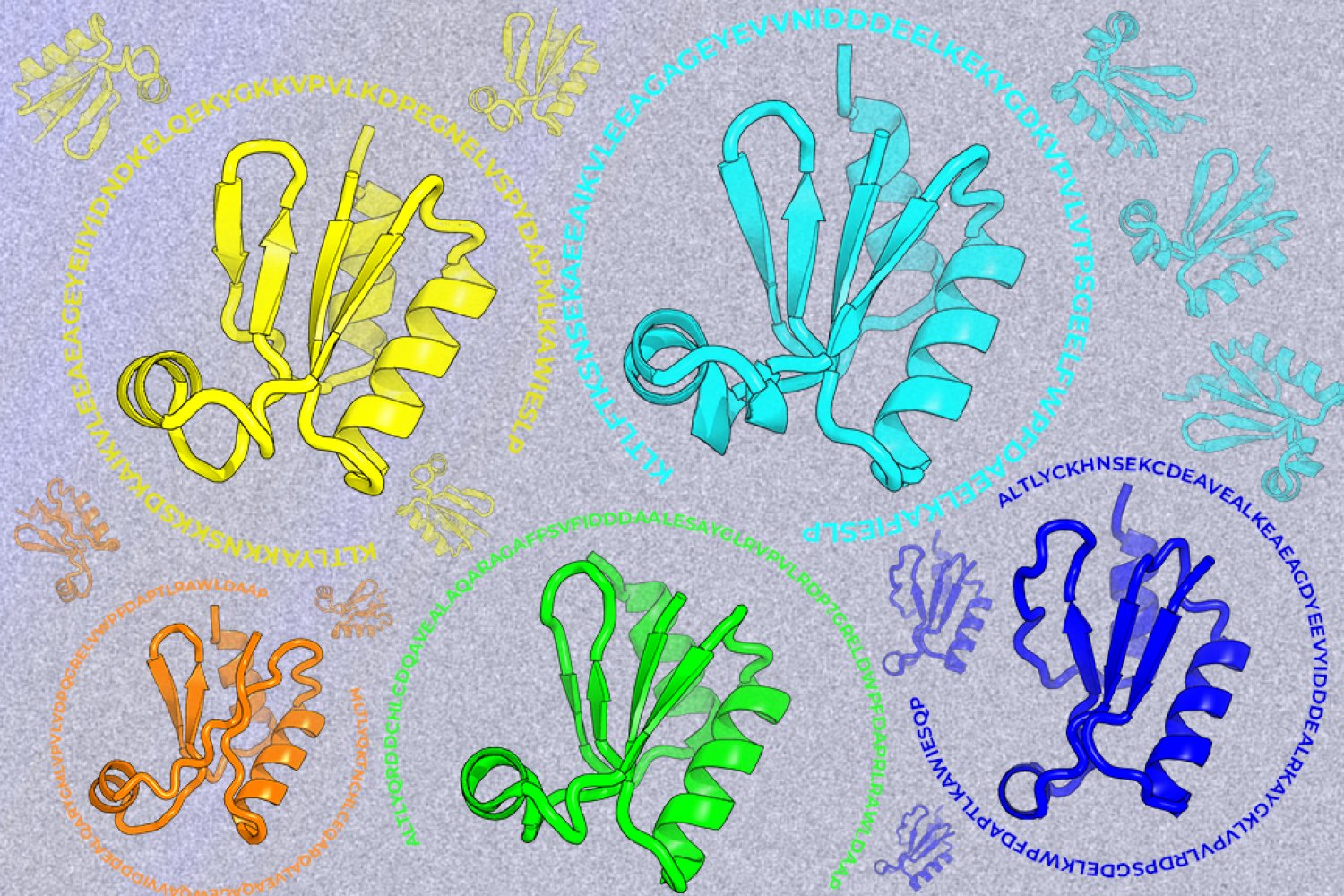
Looking beyond natural sequences

A new machine-learning framework aims to improve the success rate of computational protein design while moving away from results that reproduce sequences found in nature.


Google DeepMind Blog Nov 25, 2025

AlphaFold: Five years of impact

Explore how AlphaFold has accelerated science and fueled a global wave of biological discovery.