Deep learning-based protein design is used to generate de novo binders capturing this region of α-synuclein in a β-strand conformation to establish a set of molecules that target distinct aggregation intermediates and mechanistically reshape αSyn assembly.
Abstract
The intrinsically disordered, non-amyloid-β component domain of α-synuclein (αSyn) drives aggregation in Parkinson’s disease but lacks a stable epitope for structure-based drug design. We used deep learning-based protein design to generate de novo binders capturing this region in a β-strand conformation. Three designs bound αSyn with nanomolar affinities, with solution NMR spectroscopy supporting the intended fold. All three suppressed fibril formation at substoichiometric ratios, and fitting of aggregation kinetics resolved the microscopic steps inhibited by each. Notably, one binder preferentially engaged oligomers and inhibited secondary nucleation, both closely linked to toxicity. In cells, all three suppressed seeded αSyn assembly, with the oligomer binder being the most effective. Together, these findings establish a set of molecules that target distinct aggregation intermediates and mechanistically reshape αSyn assembly.
The non-amyloid-β component (NAC) region of the Parkinson’s-associated protein α-synuclein plays a key role in its pathogenic aggregation, motivating the development of molecules that target this critical region. Here, we show that a minimal NAC-derived motif, 66VGGAVVT72, can be reprogrammed through backbone engineeri...
Haoliang Zheng, Kyren Miller, Magdalena I. Ivanova et al.· bioRxiv· 0 citations
Parkinson's disease (PD) is characterized by the pathological aggregation of α-synuclein (α-syn) into β-sheet-rich fibrils, contributing to neuronal toxicity and oxidative stress. In this study, we investigated the inhibitory and disaggregating effects of Triprolidine (TC) on α-syn fibrillation through a combined exper...
Md Nadir Hassan, Murtaza Hussain, Faisal Nabi et al.· Biochemistry· 0 citations
The pathological aggregation of α-synuclein (α-syn), an intrinsically disordered protein that regulates synaptic vesicle trafficking in the brain, is a defining molecular feature in Parkinson’s disease (PD). Early oligomeric assemblies are widely considered the most neurotoxic species, yet their structural features rem...
Raya Sadighi, Andrea Istrati, Sigourney Karijodikoro et al.· ACS Central Science· 1 citation
The structure of α-synuclein is predominantly α-helical when bound to cellular membranes. However, under pathological or destabilizing conditions, this α-helical structure transitions into β-sheet-rich conformations, promoting protein aggregation and formation of Lewy bodies (LBs) in neurodegenerative disorders such as...
Hyeon Jin Kim, Da Hye Kim, Chang-Woo Han et al.· International Journal of Bio...· 0 citations
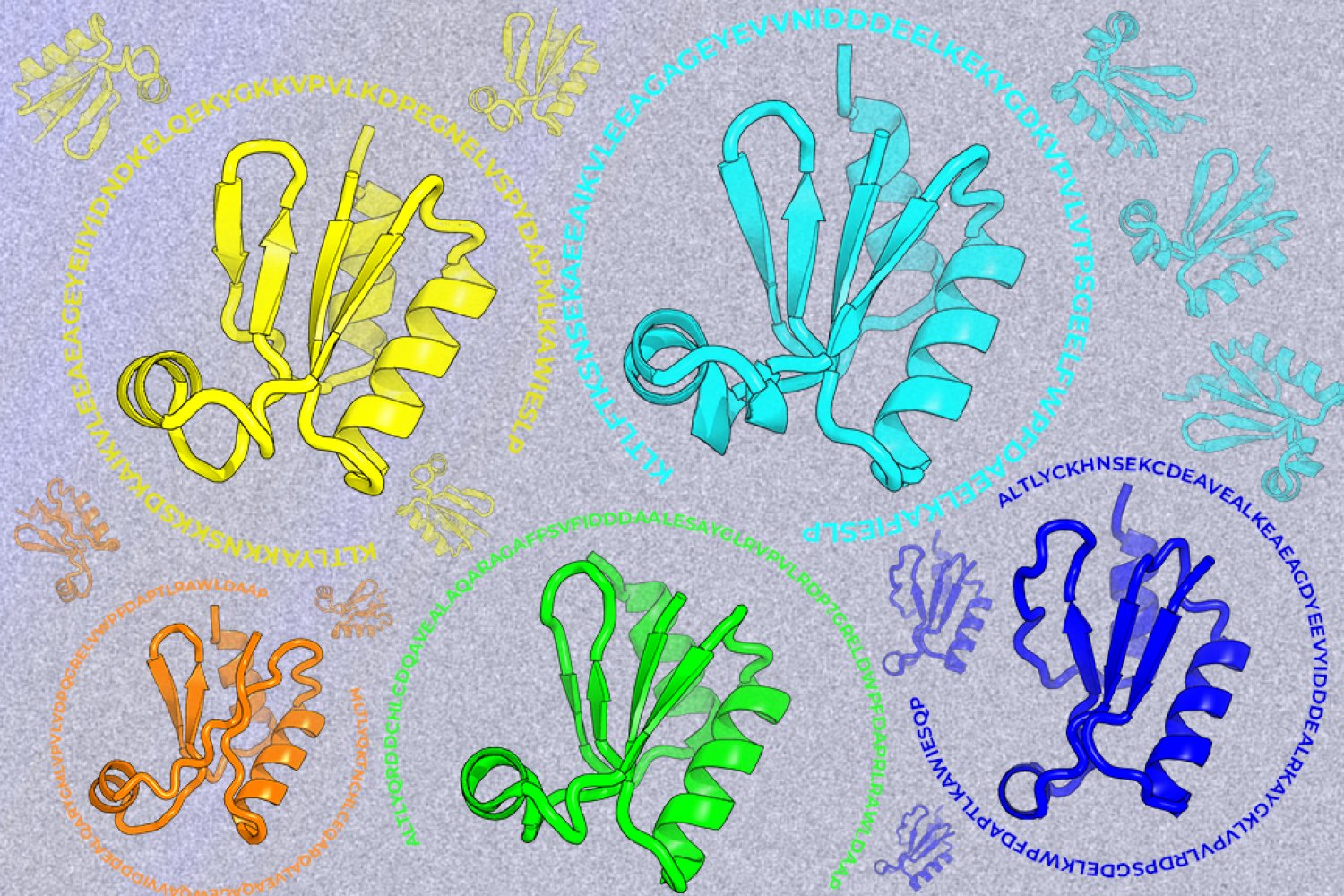
A new machine-learning framework aims to improve the success rate of computational protein design while moving away from results that reproduce sequences found in nature.