Skip to content

The Post-Economic Human: Artificial Intelligence, Ontological Displacement, and the Ideological Foundations of Future Conflict

Sep 2026 · Zenodo (CERN European Organization for Nuclear Research)

Abstract

Artificial intelligence is usually analysed as a productivity technology, a labour-market shock, or a governance problem. This article argues that its deeper political significance may arise from a fourth channel: ontological displacement. Ontological displacement occurs when a technology weakens the socially recognised characteristics through which people understand human worth, competence, status, agency, and legitimate authority. Advanced AI can produce such displacement even before mass unemployment occurs, because credible machine substitutes may devalue expertise, educational scarcity, cognitive achievement, and the belief that productive contribution is a primary basis of social membership. The article develops an AI Ideological Conflict Framework that links capability shocks to perceived replaceability, distributional stress, meaning loss, legitimacy gaps, ideological mobilisation, and possible intrastate or interstate conflict. The framework integrates labour economics, meaningful-work research, political behaviour, sacred-values scholarship, AI governance, and futures studies. Using evidence-weighted horizon scanning, causal layered analysis, and a two-axis scenario matrix, four structural futures are developed: Managed AI Capitalism, Humanist Social Dividend, Algorithmic Oligarchy, and Cybernetic Commonwealth. The analysis argues that the most dangerous period is not necessarily a mature post-work society, but a transitional regime in which employment remains culturally necessary for dignity and income while human cognitive labour becomes less economically scarce. The paper forecasts that future ideological conflict is likely to centre on two questions: who owns the surplus generated by machine intelligence, and whether human beings should retain final authority when artificial systems outperform them. Policy implications include broadening status and social contribution beyond employment, dispersing AI rents, preserving meaningful human agency, strengthening transition institutions, and treating human sovereignty as a constitutional rather than merely technical design question.

View source

Similar papers

#computer vision Review Sep 2017

Agile Software Development Methods: Review and Analysis

This publication proposes a definition and a classification of agile software development approaches and analyses ten software development methods that can be characterized as being "agile" against the defined criterion.

P. Abrahamsson, O. Salo, Jussi Ronkainen et al. · 727 citations · ⚡54
#computer vision Jun 2008

The impact of agile practices on communication in software development

The study shows that agile practices improve both informal and formal communication, but indicates that, in larger development situations involving multiple external stakeholders, a mismatch of adequate communication mechanisms can sometimes even hinder the communication.

M. Pikkarainen, Jukka Haikara, O. Salo et al. · 401 citations · ⚡48
#machine learning Review Open access Oct 2014

Software development in startup companies: A systematic mapping study

The results indicate that software engineering work practices are chosen opportunistically, adapted and configured to provide value under the constrains imposed by the startup context.

Nicolò Paternoster, Carmine Giardino, M. Unterkalmsteiner et al. · 394 citations · ⚡54

Diffusion models as plug-and-play priors

The possibility of inferring high-dimensional data inference in a model that consists of a prior and an auxiliary differentiable constraint given some additional information is considered, thereby allowing a range of potential applications in adapting models to new domains and tasks.

Alexandros Graikos, Esmeralda S. Whitammer, N. Jojic et al. · 316 citations · ⚡15

Related blog posts

GPT-Lab Sep 17, 2026

Beyond Prompt Engineering: The Role of Tacit Knowledge in Software Engineering

AI is making software generation faster, but speed does not remove the need for expertise. As more work is delegated to AI, tacit knowledge may become one of the most important human advantages in software engineering. The post Beyond Prompt Engineering: The Role of Tacit Knowledge in Software Engineering appeared first on GPT-Lab.

Microsoft Research Blog Aug 11, 2026

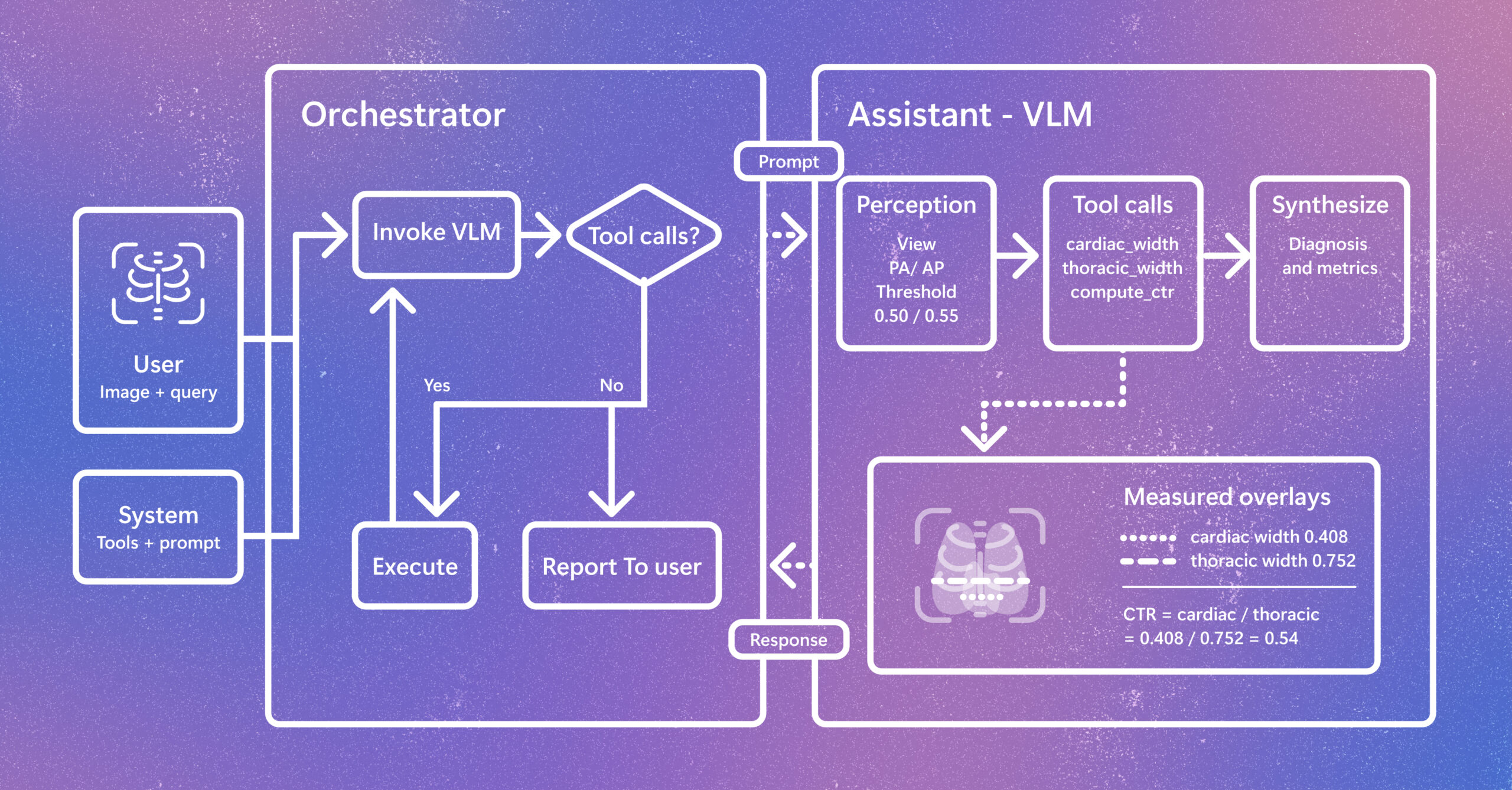
Introducing CARE-X: Towards Clinically Useful Radiology VLMs with Auxiliary Supervision, Reward-Aligned Learning, and Tool-Augmented Measurement

Radiology AI is evolving beyond report generation. CARE-X explores a unified approach that combines flexible reasoning, calibrated predictions, and measurement-based tools for chest X-ray interpretation. The post Introducing CARE-X: Towards Clinically Useful Radiology VLMs with Auxiliary Supervision, Reward-Aligned Learning, and Tool-Augmented Measurement appeared first on Microsoft Research.

We use cookies to run the site and, with your consent, for analytics and to show ads. See our Cookie Policy.