Apr 2020· International Conference on Evaluation & Assessment in Software Engineering· pp. 1-10· 20 citations· ⚡ 1 influential· 40 references
Computer ScienceEngineering
TL;DR
This investigation revealed different types of AI systems and different AI development approaches, but it is common that business opportunities involving with AI systems are not validated and there is lack of business-driven metrics that guide the development ofAI systems.
Abstract
There is a rapidly increasing amount of Artificial Intelligence (AI) systems developed in recent years, with much expectation on its capacity of innovation and business value generation. However, the promised value of AI systems in specific business contexts might not be understood, and further integrated into the development processes. We wanted to understand how software engineering processes and practices can be applied to develop AI systems in a fast-faced, business-driven manner. As the first step, we explored contextual factors of AI development and the connections between AI developments to business opportunities. We conducted 12 semi-structured interviews in seven companies in Brazil, Norway and Southeast Asia. Our investigation revealed different types of AI systems and different AI development approaches. However, it is common that business opportunities involving with AI systems are not validated and there is lack of business-driven metrics that guide the development of AI systems. The findings have implications for future research on business-driven AI development and supporting tools and practices.
This study aims to identify the key challenges and development prospects of AI implementation to enhance business efficiency and ensure sustainable development, providing strategic guidance for organizations to balance technological innovation with responsibility and risk management.
Giedrius Čyras, Vita Marytė Janušauskienė· International Scientific Con...· 1 citation
The findings indicate that organizations successfully integrating AI into their core business strategies experience improvements in operational efficiency, enhanced customer satisfaction, and increased business performance.
Ilham Karunia Akbar, Rafly Verdyansyah Pratama, Ahmad Rifa’i et al.· Devotion : Journal of Resear...· 0 citations
It is concluded that value creation through artificial intelligence depends on the alignment of technological, organizational, and human capabilities, as well as on governance strategies that support responsible, ethical, and sustainable implementation within organizations.
Guadalupe Esmeralda, Rivera García, M. I. Hernández et al.· 0 citations
It is suggested that AI can support the entire product development lifecycle, helping lean startup teams work more efficiently while leaving key decisions and expert judgment to people.
A comprehensive research framework for AI capabilities is integrated and constructs, clarifies the field’s consensus and research gaps, and not only enriches the theoretical research landscape in the field of AI capabilities but also provides practical guidance for organizations of various types to systematically build...
Hao Jiang· International Journal of Edu...· 0 citations
A methodological framework is proposed to support the systematic integration of AI into PLE and evaluate its effectiveness through a multi-case study conducted in an industrial context.
Jennifer Neville did not want to go into computer science—but that’s exactly where she landed. Neville discusses the starts and stops that led to her professional sweet spot and her work identifying “surprising failures” making it hard for AI to handle complexity. The post What AI gets wrong and what failure teaches us appeared first on Microsoft Research.
Microsoft Research Blog· microsoft.comJul 30, 2026
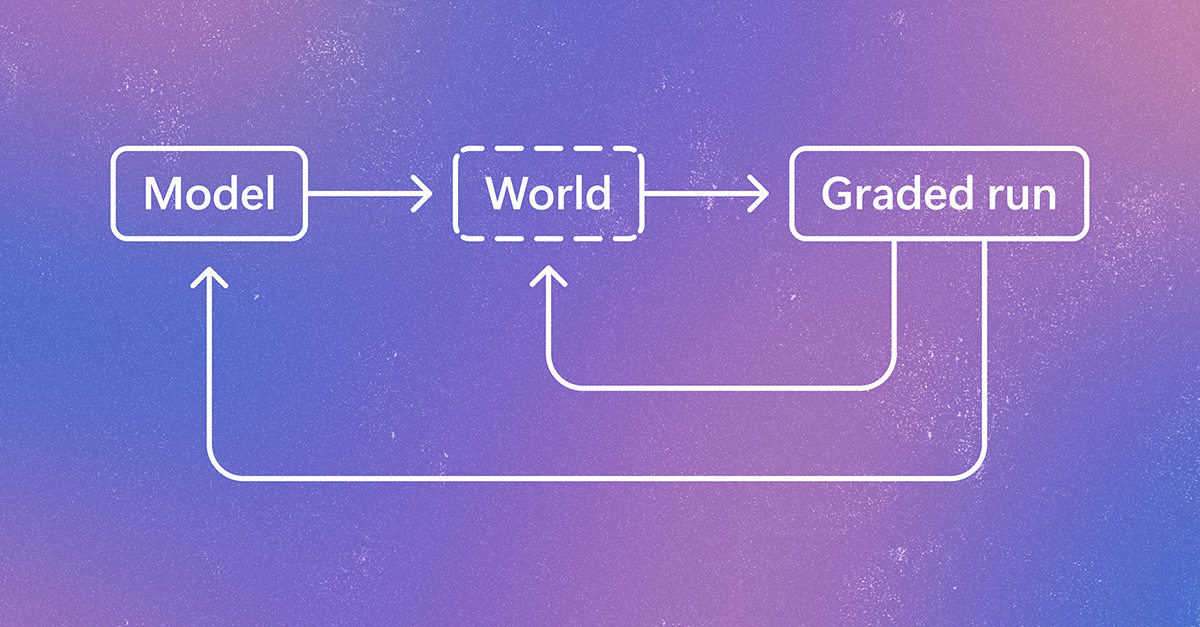
Computer-use AI agents struggle with multi-step workflows like email and customer support. Echoverse trains agents in realistic environments rather than simply providing more training tasks, helping them improve as the tasks, tests, and environments evolve. The post Echoverse: Deep, evolving environments for computer-use agents appeared first on Microsoft Research.
Computer scientist, entrepreneur, and philanthropist will collaborate with the MIT Schwarzman College of Computing to advance AI and scientific discovery.
We use cookies to run the site and, with your consent, for analytics and to show ads.
See our Cookie Policy.