Skip to content

Implementing Ethics in AI: Initial Results of an Industrial Multiple Case Study

Jun 2019 · International Conference on Product Focused Software Process Improvement · pp. 331-338 · 18 citations · ⚡ 3 influential · 20 references
Computer Science

TL;DR

This paper begins to address the focal problem of implementing ethics into AI system design and development in practice by providing elements needed for producing a baseline for ethics in AI based software development by means of an industrial multiple case study on AI systems development in the healthcare sector.

Read PDF

Similar papers

Open access Aug 2026

Bridging Engineering and Ethics: A Framework for Responsible AI-Driven Software Development

A comprehensive model for integrating ethical standards into the phases of the Software Development Life Cycle (SDLC) is proposed, founded on the pillars of fairness, transparency, accountability, and sustainability, offering practical recommendations aimed at developers, organizations, and policymakers.

A. Alaswad · 0 citations
Open access Aug 2026

Ethical risk assessment of AI in practice: a proposal of the methodology for organisational application

Three steps of the ENACT methodology are described and details three steps of the ENACT methodology and its potential and limitations for qualitative ethical risk assessment of AI in organisational settings are discussed.

N. Murashova, Leonora Onarheim Bergsjø, Heidi Dahl et al. · 0 citations
Review Open access Aug 2026

AI ethics practices in Swiss health organisations

A notable disparity between the claimed behaviours and the observed improvements is revealed, as well as in the formalisation of governance for AI ethics, in Swiss health organisations.

Heidi Lee, Sara Kijewski, Agata Ferretti et al. · 0 citations
Open access Aug 2026

AI Ethics Canvas: A graphical tool to design and deploy ethical artificial intelligence for public administrations

The canvas presented is applicable to all public administrations within the European Union who wish to adopt AI in their operations, as it references to core European legislation such as General Data Protection Regulation, AI Act, Data Act, and Data Governance Act.

Riccardo Nanni, P. G. Bizzaro, Albana Celepija et al. · 0 citations
Open access Aug 2026

Governing Artificial Intelligence in Scientific Research: The ARCHON Framework — Ethical Requirements Derived from Technical Architecture

This paper proposes the ARCHON framework, a set of ten requirements derived from the technical architecture of AI systems, to facilitate ethical compliance of scientific research for experts and practicioners engaging in roles such as proposal evaluators, project officers, ethics board members, or research administrato...

Jesus Manuel Benitez Baleato · 0 citations
Review Open access Aug 2026

Artificial intelligence in research ethics committees: Opportunities, ethical challenges, and empirical perspectives from Spain

The findings indicate that AI integration in research ethics oversight is shaped not only by technological feasibility but by institutional concerns regarding responsibility, legitimacy, and deliberative authority.

Daniel Wang, Marta Guix Arnau, Cristina Llop Julià et al. · 0 citations

Related blog posts

Microsoft Research Blog Oct 6, 2026

What AI gets wrong and what failure teaches us

Jennifer Neville did not want to go into computer science—but that’s exactly where she landed. Neville discusses the starts and stops that led to her professional sweet spot and her work identifying “surprising failures” making it hard for AI to handle complexity.  The post What AI gets wrong and what failure teaches us appeared first on Microsoft Research.

Microsoft Research Blog Jul 30, 2026

Echoverse: Deep, evolving environments for computer-use agents

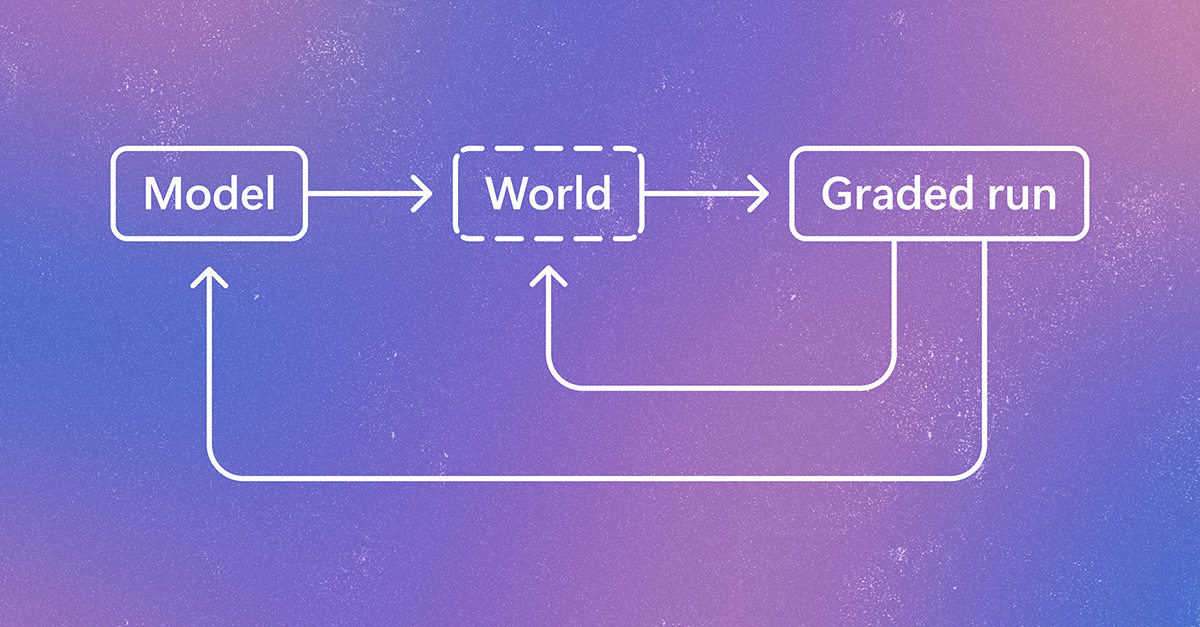
Computer-use AI agents struggle with multi-step workflows like email and customer support. Echoverse trains agents in realistic environments rather than simply providing more training tasks, helping them improve as the tasks, tests, and environments evolve. The post Echoverse: Deep, evolving environments for computer-use agents appeared first on Microsoft Research.

We use cookies to run the site and, with your consent, for analytics and to show ads. See our Cookie Policy.