May 2019· EUROMICRO Conference on Software Engineering and Advanced Applications· pp. 46-50· 17 citations· ⚡ 2 influential· 37 references
Computer Science
TL;DR
A key finding from the study indicates that simply the presence of an ethical tool has an effect on ethical consideration, creating more responsibility even in instances where the use of the tool is not intrinsically motivated.
Abstract
Use of artificial intelligence (AI) in human contexts calls for ethical considerations for the design and development of AI-based systems. However, little knowledge currently exists on how to provide useful and tangible tools that could help software developers and designers implement ethical considerations into practice. In this paper, we empirically evaluate a method that enables ethically aligned design in a decision-making process. Though this method, titled the RESOLVEDD strategy, originates from the field of business ethics, it is being applied in other fields as well. We tested the RESOLVEDD strategy in a multiple case study of five student projects where the use of ethical tools was given as one of the design requirements. A key finding from the study indicates that simply the presence of an ethical tool has an effect on ethical consideration, creating more responsibility even in instances where the use of the tool is not intrinsically motivated.
A comprehensive model for integrating ethical standards into the phases of the Software Development Life Cycle (SDLC) is proposed, founded on the pillars of fairness, transparency, accountability, and sustainability, offering practical recommendations aimed at developers, organizations, and policymakers.
A. Alaswad· Al-Farooq Journal of Science...· 0 citations
Three steps of the ENACT methodology are described and details three steps of the ENACT methodology and its potential and limitations for qualitative ethical risk assessment of AI in organisational settings are discussed.
N. Murashova, Leonora Onarheim Bergsjø, Heidi Dahl et al.· Nordic Machine Intelligence· 0 citations
A critical analysis of tools and trust mark frameworks intended to operationalize trustworthy AI (TAI), drawing on a comprehensive dataset from the OECD identifies significant asymmetries in ethical focus, lifecycle coverage, stakeholder targeting, and tool typology.
Michael Papademas, Xenia Ziouvelou, K. Karpouzis et al.· arXiv.org· 0 citations
This study examines how organizations design and implement ethical AI systems to enhance customer and employee experience (CX and EX) while navigating concerns around transparency, autonomy, and trust. Drawing on stakeholder theory and socio-technical systems theory, we conducted qualitative multi-case study across fou...
This paper proposes the ARCHON framework, a set of ten requirements derived from the technical architecture of AI systems, to facilitate ethical compliance of scientific research for experts and practicioners engaging in roles such as proposal evaluators, project officers, ethics board members, or research administrato...
Jesus Manuel Benitez Baleato· Open Research Europe· 0 citations
The CICAP paradigm proposes a reproducible and responsible model for ethical and sustainable co-creation in educational engineering, and provides preliminary evidence that a human-supervised, AI-assisted workflow can increase efficiency while adhering to ethical and production-quality standards.
Yassine Karroumi, Khalid El Khattabi, F. Ouzennou et al.· International Journal of Inf...· 0 citations
Jennifer Neville did not want to go into computer science—but that’s exactly where she landed. Neville discusses the starts and stops that led to her professional sweet spot and her work identifying “surprising failures” making it hard for AI to handle complexity. The post What AI gets wrong and what failure teaches us appeared first on Microsoft Research.
Microsoft Research Blog· microsoft.comJul 30, 2026
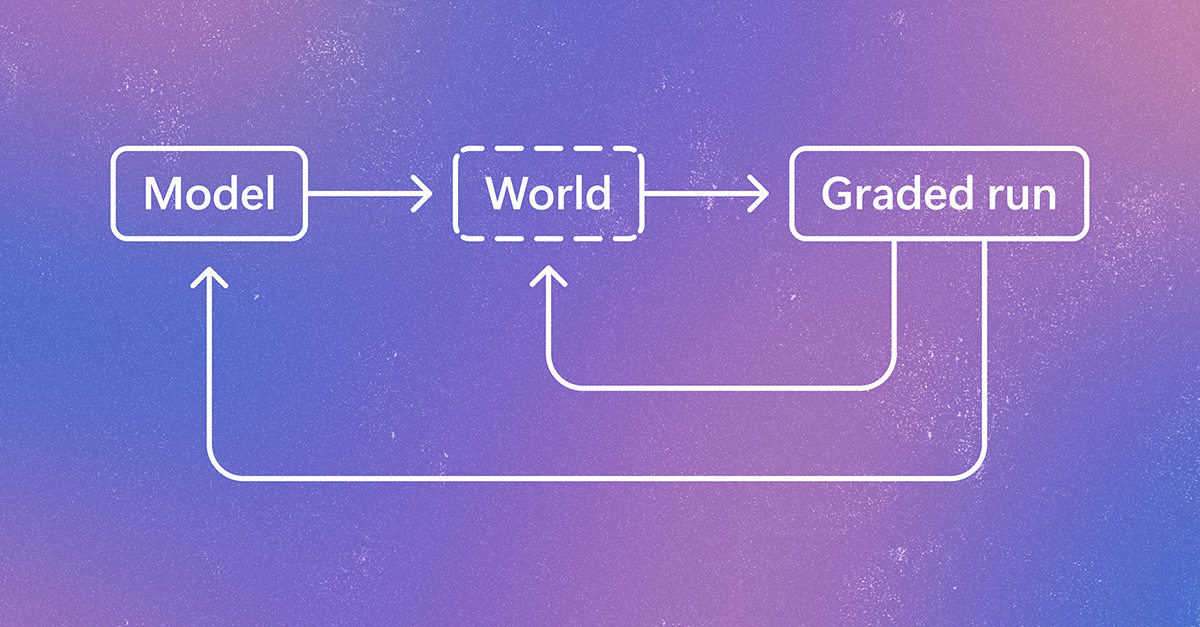
Computer-use AI agents struggle with multi-step workflows like email and customer support. Echoverse trains agents in realistic environments rather than simply providing more training tasks, helping them improve as the tasks, tests, and environments evolve. The post Echoverse: Deep, evolving environments for computer-use agents appeared first on Microsoft Research.
Computer scientist, entrepreneur, and philanthropist will collaborate with the MIT Schwarzman College of Computing to advance AI and scientific discovery.
We use cookies to run the site and, with your consent, for analytics and to show ads.
See our Cookie Policy.