A glycan-dependent chaperone network is defined, finely tuned by a combination of low-micromolar interactions between the constituents, that ensures efficient MHC-I maturation and illustrates fundamental principles of ER protein quality control.
Abstract
Protein folding in the endoplasmic reticulum (ER) relies on N-linked glycosylation and glycan remodeling to guide quality control. Major histocompatibility complex class I (MHC-I) molecules, essential for adaptive immunity, undergo a specialized maturation pathway involving the peptide-loading complex (PLC), the editor TAPBPR, the UDP-glucose:glycoprotein glucosyltransferase, and the lectin chaperone calreticulin. However, how glycan-dependent mechanisms coordinate MHC-I transfer between these factors has remained unclear. Using a fully reconstituted system, we show that retrograde transfer of peptide-receptive MHC-I from TAPBPR to tapasin requires calreticulin recognition of monoglucosylated MHC-I glycans. While calreticulin's C-terminal acidic helix is dispensable for releasing reglucosylated MHC-I from TAPBPR, it is essential for productive docking of MHC-I onto tapasin. These findings reveal a glycan-surveillance mechanism that enables retrieval of suboptimally loaded MHC-I molecules missed by the initial quality control at the PLC. Our work defines a glycan-dependent chaperone network, finely tuned by a combination of low-micromolar interactions between the constituents, that ensures efficient MHC-I maturation and illustrates fundamental principles of ER protein quality control.
Abstract Class I MHC peptide (MHC-Ip) multimers are well-established reagents that detect antigen-specific T cells. The classical method for production of MHC-Ip multimers begins with the expression of MHC heavy chains (HCs) and β2-microglobulin (β2m) subunits as inclusion bodies in Escherichia coli and is followed by denaturant solubilization, in vitro folding in the presence of a defined peptide ligand, and purification by size exclusion chromatography. This protocol is labor intensive, difficult to scale, and represents a significant bottleneck in application of the technology. Herein, we present a novel method for the expression in eukaryotic cells of secreted peptide exchange–competent class I MHC proteins in their native conformation. In this method, expression constructs are engineered as bimolecular complexes composed of an MHC HC and a β2m molecule covalently linked at its amino terminus to an MHC-binding peptide through a flexible peptide linker containing a defined protease site. Upon proteolysis, the original peptide occupant of the MHC binding site dissociates and is easily replaced with a synthetic peptide. When leucine zippers are added to the carboxyl terminus of each subunit, protease cleavage of the linker results in a stable HC/β2m complex that can be isolated and stored for subsequent peptide loading. Using this method, we have produced homogeneous MHC-Ip complexes for 25 class I MHC alleles and demonstrated that tetramers produced in this way are equivalent to conventionally produced tetramers for T-cell staining.
V. Ramachandiran, J. Shires, Richard Willis et al.· Journal of Immunology· 0 citations
The specific binding of antigenic peptides to major histocompatibility complex class I (MHC-I) molecules is a pivotal step in adaptive immune responses. Post-translational modifications (PTMs) have been shown to profoundly regulate this process and thereby modulate T-cell recognition; however, their atomic-level mechanisms remain insufficiently understood. To address this gap, we employed all-atom molecular dynamics simulations combined with multidimensional energetic and dynamic analyses to systematically dissect PTM-dependent regulatory mechanisms across diverse antigen peptide-MHC-I (pMHC) systems. Representative viral (SARS-CoV-2 spike protein), model (ovalbumin), autoimmune-associated (MBP), and tumor-associated (TVF and RSP) antigen peptides were examined, encompassing acetylation, phosphorylation, citrullination, methylation, hydroxylation, and succinylation modifications. Our results demonstrate that PTM effects are highly context-dependent and governed by both the modified site and the physicochemical nature of the introduced functional group. Charge-altering modifications at critical anchoring positions-such as N-terminal acetylation and phosphorylation-substantially weaken pMHC binding by disrupting electrostatic complementarity, reorganizing hydrogen-bond networks, accompanied by altered collective motions, and expanding the MHC α1/α2 binding groove. In contrast, conservative modifications located in solvent-exposed regions (e.g., lysine methylation) exert minimal structural and energetic perturbations. Notably, citrullination in disease-associated antigens enhances binding affinity through strengthened hydrophobic interactions, optimized hydrogen-bond rearrangements, accompanied by increased dynamic cooperativity, and contraction of the binding groove, providing a mechanistic basis for its immunological consequences. Across all systems, PTMs regulate pMHC recognition through multiscale coupling mechanisms that integrate residue-level energetic redistribution, cooperative motion reprogramming, and global groove geometry remodeling. Importantly, the simulation-derived binding trends are consistent with available experimental observations, supporting the reliability of the computational framework. Collectively, this study establishes a unified structure-energy-dynamics model explaining how PTMs function as atomic-level chemical switches in antigen presentation. Beyond mechanistic insight, the demonstrated agreement with experimental data suggests that this computational strategy possesses predictive potential for estimating PTM-dependent pMHC binding behaviors across diverse immunological contexts.
Lysosomes drive antigen proteolysis and peptide loading for major histocompatibility complex class II (MHCII) presentation in antigen-presenting cells (APCs), enabling activation of peptide-specific CD4+ T helper cells (CD4+ Th cells). Tight regulation of endocytic trafficking, protease activity, and peptide editing is required to generate stable peptide-MHCII complexes and balanced immune responses. Conversely, dysregulation of antigen catabolism or loading can promote impaired pathological immunity, including autoimmunity. However, key mechanistic questions remain, including how proteolysis, redox regulation, and peptide editing shape the MHCII ligandome across APC subsets and inflammatory states. In this review, we explore the main mechanisms of antigen acquisition, endocytic/lysosomal factors controlling MHCII-restricted processing and presentation, and evidence linking lysosomal dysfunction to autoimmunity. Understanding the functions of lysosomes in immune cells is crucial for elucidating their roles in physiological and pathological states, for developing targeted therapeutic strategies and for enhancing the safety and efficacy of novel biological entities (NBEs).
Gabriele Sergio Colangelo, Kyra J Cowan, Federico Riccardi Sirtori et al.· Journal of Immunology· 0 citations
Abstract Viral immune evasion of the major histocompatibility complex class I (MHC-I) antigen processing and presentation (APP) pathway is a centerpiece of the art of deception that enables persistence, reinfection, and severe disease. It does so by blunting peptide-MHC-I (pMHC-I) display, weakening CD8+ cytotoxic T lymphocyte (CTL) surveillance, and balancing the counterpressure imposed by natural killer (NK) cell missing-self responses. Rather than relying on a single trick, viruses deploy coordinated, multinode interference that functionally rewires the APP assembly line. These deceptive strategies include limiting antigen substrate availability, reshaping proteasomal peptide generation, sabotaging transporters associated with antigen processing (TAP)-dependent peptide import, disrupting peptide-loading complex-assisted editing, misdirecting MHC-I trafficking, and accelerating surface pMHC-I degradation. In parallel, many viruses fine-tune immune visibility through allele-selective modulation and nonclassical MHC circuits such as human leukocyte antigen E (HLA-E), thereby optimizing CTL evasion without inducing overwhelming NK activation. This review, therefore, describes the development of pathway-centered mechanistic synthesis across DNA and RNA virus families. We further integrate innate immune antagonism, endoplasmic reticulum stress, antigen-presentation competence, cross-presentation limits, and virus-shaped peptide landscapes into a unified framework for understanding viral control of MHC-I output and its translational implications.
Yu Ye, Ying Zhang, Haobing Nie et al.· FEMS Microbiology Reviews· 0 citations
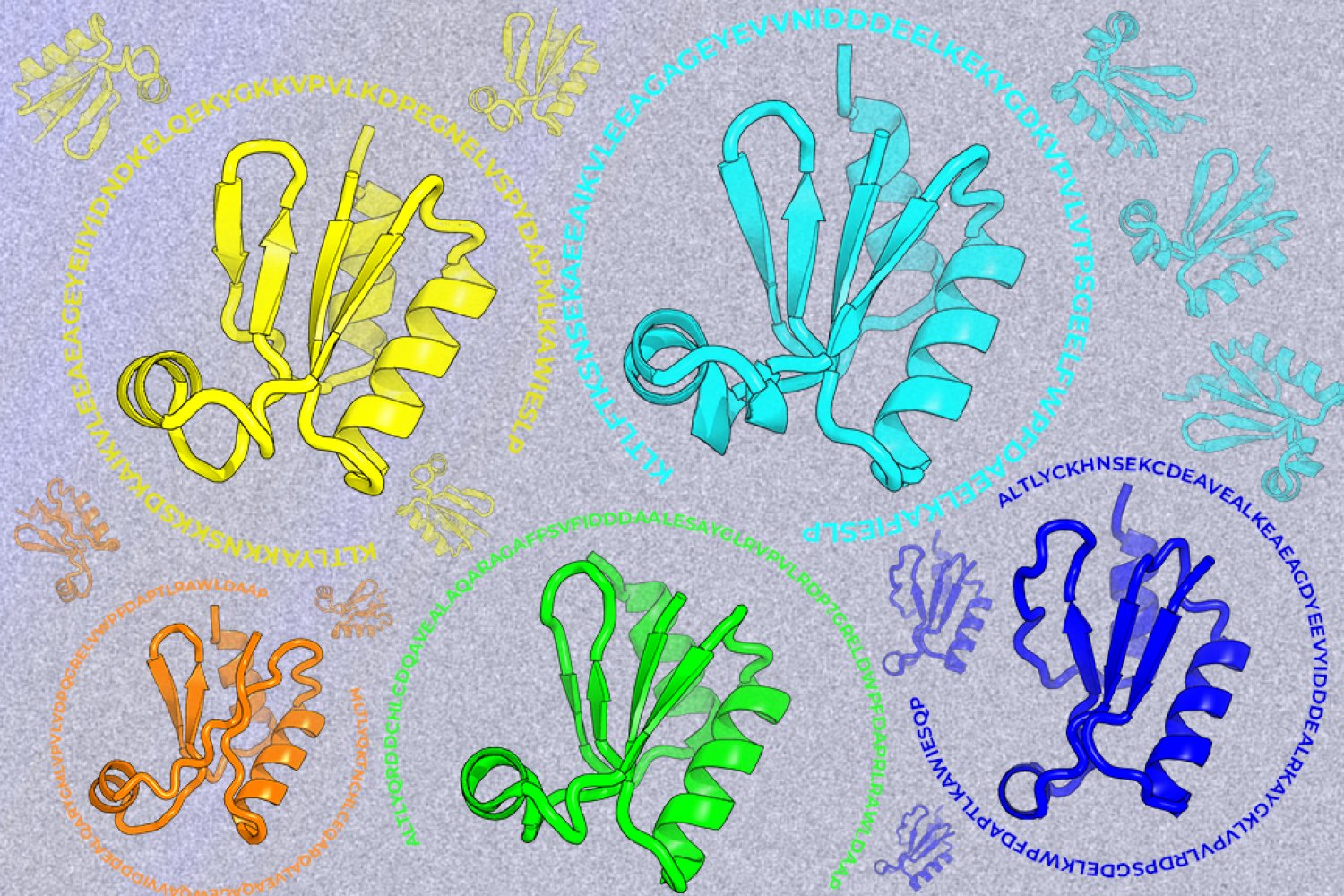
A new machine-learning framework aims to improve the success rate of computational protein design while moving away from results that reproduce sequences found in nature.