Jul 2026· International Journal of Web of Multidisciplinary Studies· 4 citations· 35 references
Ethics and Social Impacts of AI
Abstract
Agentic artificial intelligence can plan, use tools, communicate with other systems, and execute actions across changing environments. Its governance problem is therefore temporal: a control that was adequate at deployment may become materially weaker after model updates, data drift, new tool permissions, adversarial adaptation, staff turnover, or regulatory change. This paper develops the governance half-life construct to measure the rate at which an artificial intelligence control loses effective coverage after validation. Using an integrative multidisciplinary review and design-science theory building, the study combines artificial intelligence risk management, software reliability, cybersecurity, human factors, organizational learning, and regulatory governance. The proposed model represents control effectiveness as a decaying function, derives a governance half-life and a maximum risk-tolerable revalidation interval, and combines scheduled, event-triggered, and continuous assurance. A worked analytical demonstration shows why low-risk knowledge agents may tolerate periodic review while transaction, eligibility, and safety-relevant agents require much shorter assurance cycles. The framework contributes a control-decay ledger, portfolio-level aggregation, testable propositions, and an implementation maturity model. It shifts governance from one-time approval and annual audit toward risk-sensitive evidence renewal. The framework is intended for empirical calibration rather than treated as a universal numerical standard, but it offers organizations a practical way to align agent autonomy, control durability, residual risk, and revalidation cadence.
It is found that Llama 3 delivers comparable quality to leading language models such as GPT-4 on a plethora of tasks, and performs competitively with the state-of-the-art on image, video, and speech recognition tasks.
This paper investigates developing real-world perception for active agents, proposes Gibson Environment for this purpose, and showcases a set of perceptual tasks learned therein.
F. Xia, Amir Zamir, Zhi-Yang He et al.· 2018 IEEE/CVF Conference on...· 1,069 citations· ⚡112
This publication proposes a definition and a classification of agile software development approaches and analyses ten software development methods that can be characterized as being "agile" against the defined criterion.
P. Abrahamsson, O. Salo, Jussi Ronkainen et al.· arXiv.org· 727 citations· ⚡54
Supporting data, adapters, predictions and code for the article *Low-Cost LoRA Fine-Tuning of Small Language Models for Multi-Step Arithmetic Reasoning* by Jake O'Grady, Asena Isik Gürhan, Chee Fong Ting and Effirul Ramlan (University of Galway). We generated 20,000 GSM8K-derived arithmetic problems with step-by-step s...
O'Grady, Jake, Gürhan, Asena Isik, Chee, Fong Ting et al.· Zenodo (CERN European Organi...· 465 citations
The study shows that agile practices improve both informal and formal communication, but indicates that, in larger development situations involving multiple external stakeholders, a mismatch of adequate communication mechanisms can sometimes even hinder the communication.
M. Pikkarainen, Jukka Haikara, O. Salo et al.· Empirical Software Engineeri...· 401 citations· ⚡48
Related blog posts
Microsoft Research Blog· microsoft.comNov 16, 2026
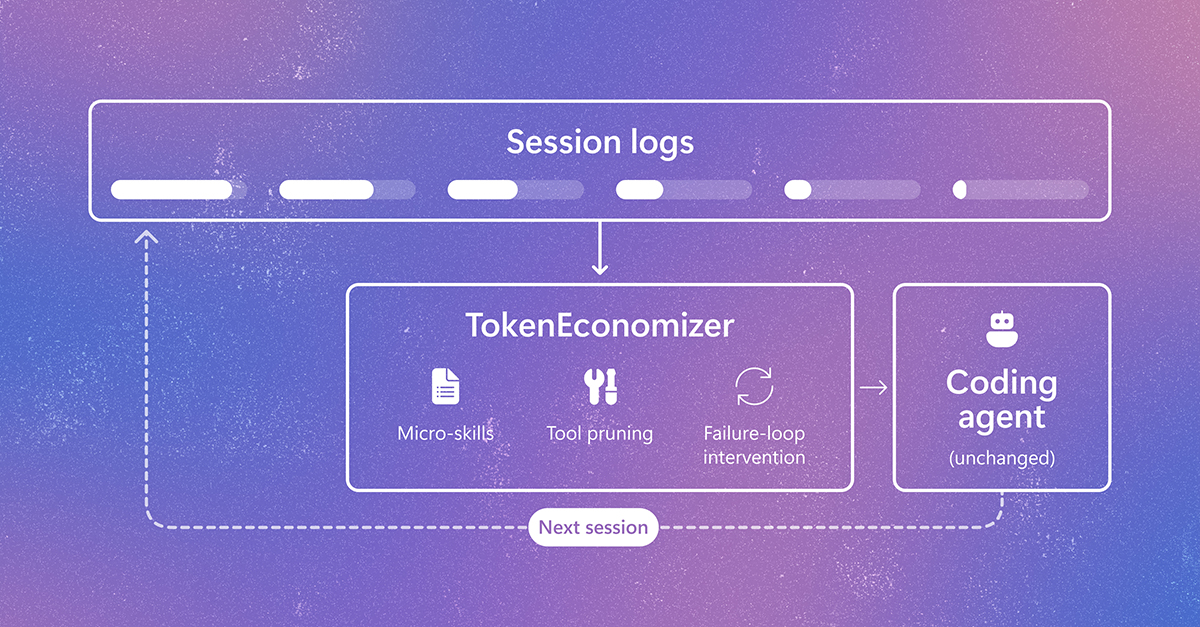
AI coding agents are increasingly help developers fix bugs and build features largely on their own, but every interaction with their models consumes tokens. In each session, an agent sends instructions, tool descriptions, and session history to its model. Most efforts to reduce this cost focus on individual tasks. Yet developers return to the same […] The post TokenEconomizer: Learning from Experience to Make AI Coding Agents More Efficient appeared first on Microsoft Research.
MIT News · Artificial Intelligence· news.mit.eduOct 23, 2026
Assistant Professor Benjamin Lindquist studies how engineers deliberately injected randomness into early AI, giving rise to deep-learning models that sometimes hallucinate.
Learn how Google DeepMind and GovTech Singapore uses lightweight on-device Gemma models to intercept conversational scams in private chats with zero cloud data egress.
Microsoft Research Blog· microsoft.comOct 12, 2026
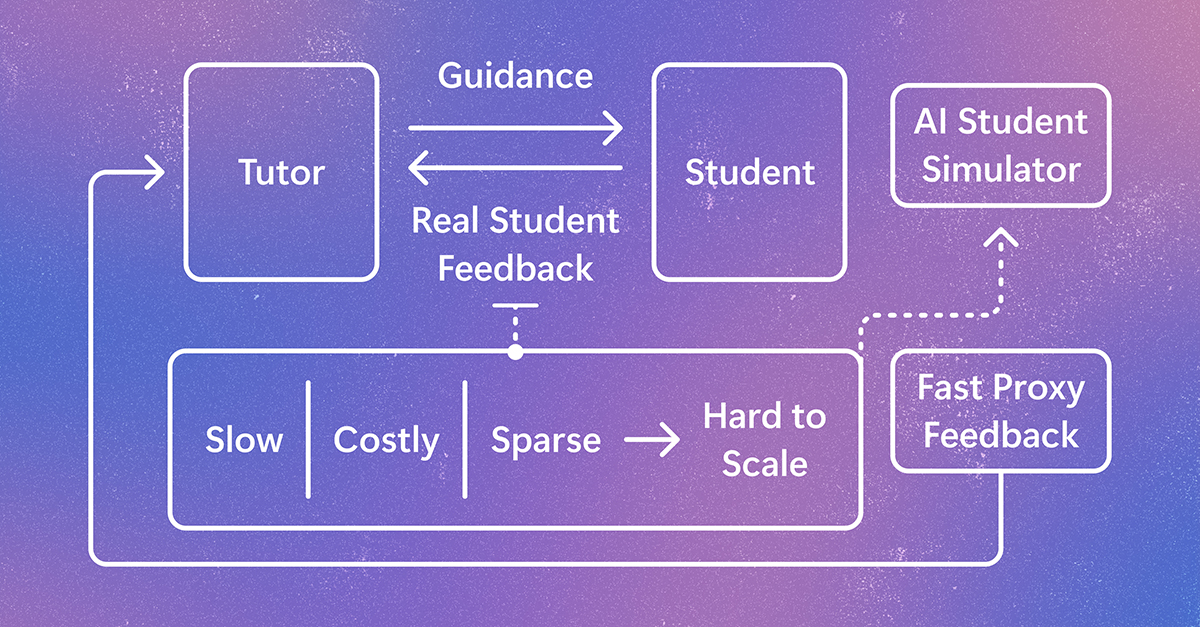
StudentSim is a research system for evaluating and improving AI tutoring tools before they are tested with learners. It models how individuals may engage with tutors, giving feedback to improve tutor performance across subjects like chess, writing, and mathematics. The post Simulating student learning for better AI tutoring appeared first on Microsoft Research.
We use cookies to run the site and, with your consent, for analytics and to show ads.
See our Cookie Policy.