Oct 2026· Philosophical transactions of the Royal Society of London. Series B, Biological sciences· Vol 381· 0 citations· 38 references
Medicine
Abstract
Abstract The mitochondrial chaperone and co-chaperone HSP60/HSP10 (HSPD1/ HSPE1), the mammalian homologues of bacterial GroEL/GroES, form a barrel-and-lid complex to fold newly imported or misfolded mitochondrial proteins. Several lines of evidence suggest that HSPD1 and HSPE1 have diverged in function. HSPD1 and HSPE1 are found in different clusters in the ecological network of gene expression in cancer. MTHFD2 was demonstrated to be an endogenous client protein of HSPD1 that does not require HSPE1 for its folding. Newly imported proteins show differential dependencies on HSP60 and HSP10 in isolated yeast mitochondria. Finally, HSPE1 was found to regulate a mitochondrial GTPase and modulate amyloid fibril formation independently of HSPD1. Nevertheless, the extent to which HSPD1 and HSPE1 have diverged in function has not been explored. Here, we show divergent transcriptomic and metabolic responses to the depletion of HSP60 versus HSP10 in cancer cells, and divergent activation of the mitochondrial unfolded protein response across tissues in Caenorhabditis elegans. Importantly, responses to HSP10 depletion were not nested within those of HSP60 depletion. We speculate that HSPE1 has diverged from HSPD1 and may have additional new cellular functions. This article is part of the Theo Murphy meeting issue ‘ProteostaSys: a systems view of proteostasis’.

The comparison of adopter and non-adopter sample reveals three potential adoption inhibitor, security, data privacy, and portability, which underlines the importance of the technical and security perspectives for research investigating the adoption of technology.
Nattakarn Phaphoom, Xiaofeng Wang, S. Samuel et al.· Journal of Systems and Softw...· 111 citations· ⚡8
This study investigates how Lean internal startup facilitates software product innovation in large companies and identifies its enablers and inhibitors, and shows the potential of the method-in-action framework to investigate the Lean startup approach in non-startup context.
Henry Edison, Nina M. Smørsgård, Xiaofeng Wang et al.· Journal of Systems and Softw...· 78 citations· ⚡6
This paper highlights the challenges to conduct proper affect-related studies with psychology, provides a comprehensive literature review in affect theory, and proposes guidelines for conducting psychoempirical software engineering.
D. Graziotin, Xiaofeng Wang, P. Abrahamsson· SSE@SIGSOFT FSE· 56 citations· ⚡4
This study conducts a multiple case study on twenty European software startups and proposes a prototype-centric learning model in early stage software startups, and identifies factors that occur as barriers but also facilitators for prototyping in earlystage software startups.
Anh Nguyen-Duc, Xiaofeng Wang, P. Abrahamsson· International Conference on...· 44 citations· ⚡5
It is demonstrated that linker-free PROTACs can outperform traditional designs, marking a paradigm shift in PROTAC development for targeted protein degradation.
Pinal, a 16-billion-parameter foundation model that produces protein candidates from natural-language functional descriptions, supports natural language as a high-level interface for candidate generation in protein design, enabling programmable exploration with reduced reliance on manually specified structural or seque...
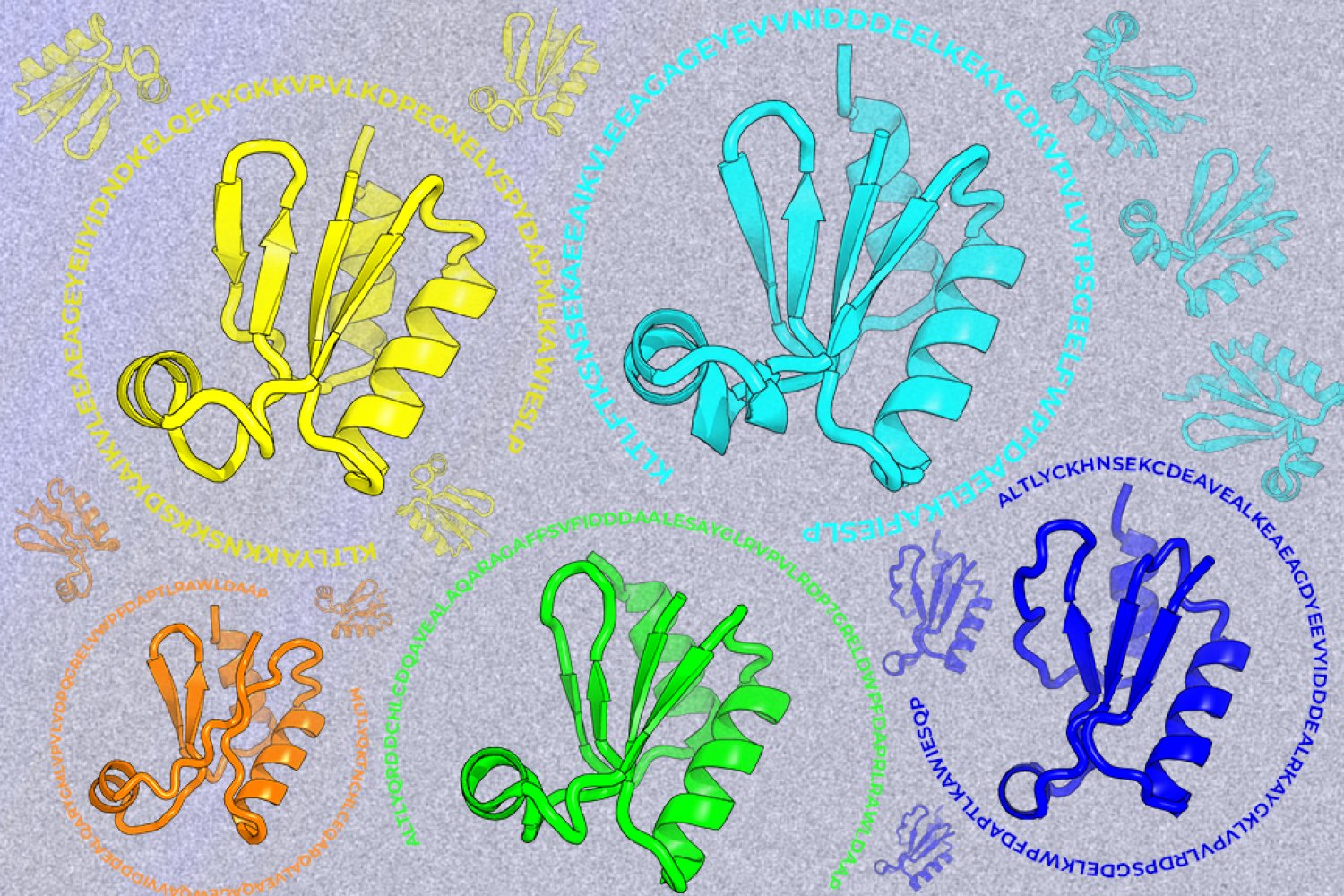
A new machine-learning framework aims to improve the success rate of computational protein design while moving away from results that reproduce sequences found in nature.