This study investigates how employees in a energy company understand AI adoption and identifies areas where AI and LLMs-based agentic workflows could assist daily activities, including reporting work, forecasting, data handling, maintenance-related tasks, and anomaly detection.

The study demonstrates that the successful deployment of AI Builder is contingent more on organizational readiness and accountability than technological maturity, and offers an informed blueprint to organizations adopting low-code AI platforms.
A research framework for analysing the added value of generative AI in logistics organizations, with a focus on “difficult to automate” tasks and processes is presented.
Gerald Schneikart, Walter Mayrhofer· Engineering review· 0 citations
The findings indicate that GenAI use is widespread in the sample, but integration into business processes is incremental and localized rather than deeply embedded and governance practices are evolving alongside its use.
Shirin Hasavari, J. Zaveri· Knowledge and Process Manage...· 0 citations
The study demonstrates that the successful deployment of AI Builder is contingent more on organizational readiness and accountability than technological maturity, and offers an informed blueprint to organizations adopting low-code AI platforms.
P. Vutla, Triveni Yenugu· Journal of Information Techn...· 0 citations
Evidence is synthesized that GenAI functions most reliably as an augmentation tool that aggregates and structures diverse inputs for human judgment, rather than as an autonomous decision-maker, and that the primary barrier to enterprise value is organizational and workflow integration rather than model capability.
M.SANGEETHA, Una Suman Kumar Patro, K.ARPITHA et al.· International journal of com...· 0 citations
A conceptual framework that connects traditional project governance, agile execution and artificial intelligence (AI)-supported decision-making within one operating model is developed and argues that AI creates value only when its outputs are connected to an existing decision process at the point where action is still...
Sanjay Kumar, S. R.· SHS Web of Conferences· 0 citations
Jennifer Neville did not want to go into computer science—but that’s exactly where she landed. Neville discusses the starts and stops that led to her professional sweet spot and her work identifying “surprising failures” making it hard for AI to handle complexity. The post What AI gets wrong and what failure teaches us appeared first on Microsoft Research.
MIT News · Artificial Intelligence· news.mit.eduSep 23, 2026
Computer scientist, entrepreneur, and philanthropist will collaborate with the MIT Schwarzman College of Computing to advance AI and scientific discovery.
Microsoft Research Blog· microsoft.comJul 30, 2026
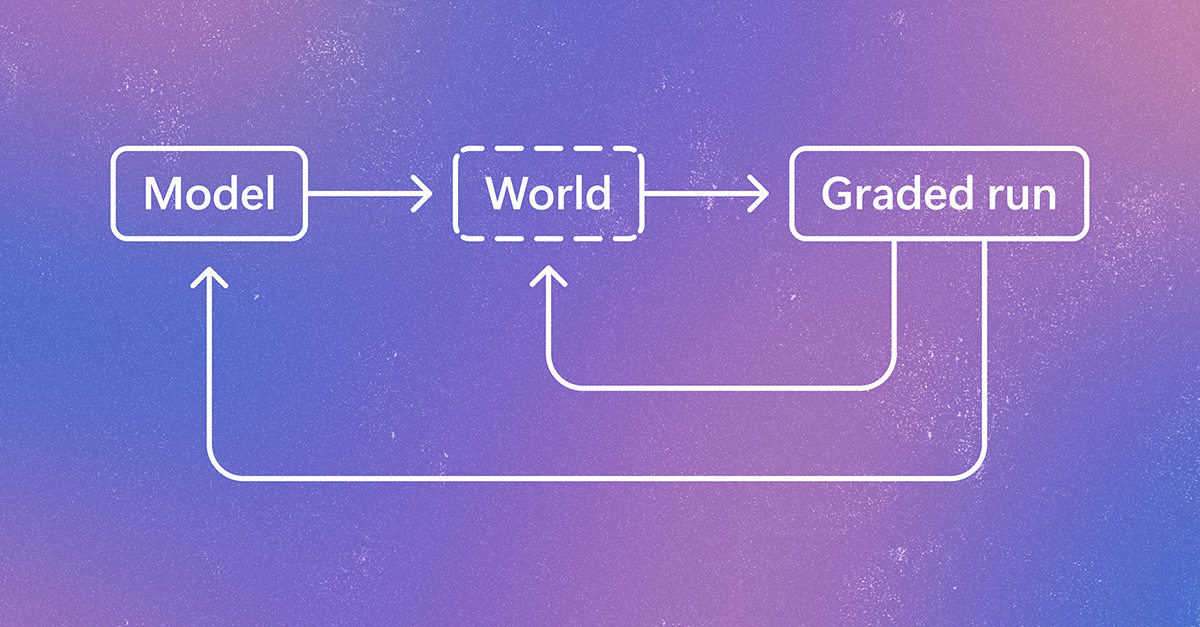
Computer-use AI agents struggle with multi-step workflows like email and customer support. Echoverse trains agents in realistic environments rather than simply providing more training tasks, helping them improve as the tasks, tests, and environments evolve. The post Echoverse: Deep, evolving environments for computer-use agents appeared first on Microsoft Research.
MIT News · Artificial Intelligence· news.mit.eduJun 30, 2026
Computer scientist Phillip Isola cuts through the hype to explain how AI agents work and what the future might hold for this rapidly advancing technology.
We use cookies to run the site and, with your consent, for analytics and to show ads.
See our Cookie Policy.