Skip to content
#protein folding Open access

Human Hsp70 paralogs display selective J-domain interactions tuning proteostasis under stress.

Aug 2026 · Proceedings of the National Academy of Sciences of the United States of America · Vol 123 34, pp. e2534903123 · 0 citations · 58 references
Medicine

TL;DR

An evolved hierarchy of paralog-specific JDP couplings that dynamically rewires the Hsp70 network from active repair to protection during stress is revealed, revealing an evolved hierarchy of paralog-specific JDP couplings that dynamically rewires the Hsp70 network from active repair to protection during stress.

Abstract

Hsp70 chaperones are central regulators of proteostasis, mediating folding, refolding, degradation, and aggregation-prevention. Their activity is tuned by the diverse J-domain proteins (JDPs), which both recruit client proteins and stimulate Hsp70 ATP hydrolysis via interaction with a conserved J-domain. The cytosol contains four Hsp70 paralogs-the stress-inducible HSPA1A/B and HSPA6, and the constitutively expressed HSPA8. Whether these act redundantly or carry distinct cellular functions has remained unresolved. Here, we systematically map the interactions of cytosolic Hsp70s with broad-specificity JDPs to elucidate how paralog identity shapes cellular function. We found that despite the high conservation of the JDP-Hsp70 interaction sites, the affinities of these interactions and their functionality varied greatly. HSPA8 behaves as a generalist, engaging all JDP classes with comparable affinity, consistent with its housekeeping role. By contrast, HSPA1 preferentially binds canonical Class A and B JDPs, while showing only weak binding to Class B'. Therefore, under stress, HSPA1 pairs only with Class A/B JDPs to support robust protein refolding, while freeing Class B' to suppress protein aggregation in an Hsp70-independent manner. Most unexpectedly, HSPA6, the most stress-inducible paralog, binds selectivity to Class B JDPs, losing interactions with both Class A and B'. Thus, under severe stress, HSPA6 works exclusively with Class B JDPs to ensure ATP-dependent protein repair, while freeing Class A and B' JDPs to act independently of Hsp70 to protect damaged/misfolded proteins. Our findings reveal an evolved hierarchy of paralog-specific JDP couplings that dynamically rewires the Hsp70 network from active repair to protection during stress.

Read PDF

Similar papers

Aug 2026

Intragenomic homologs with distinct phase behaviors broaden the range of cellular stress responses.

Intragenomic homologs are widespread, but their physiological roles are often masked by redundancy. Histone-like nucleoid structuring protein (H-NS), a nucleoid-associated protein in Gram-negative bacteria, typically coexists with homologs like StpA, whose functions are obscured by a lack of strong phenotypes. We demonstrate here that the interaction between H-NS and StpA fine-tunes the physico-chemical properties of nucleoid-associated compartments. Although H-NS forms dynamic condensates in vitro, StpA assembles into stable insoluble fibrils. However, together the two proteins form liquid-like droplets, whose fluidity and stability are tunable by their relative stoichiometry. By increasing the levels of StpA over H-NS, bacteria stabilize heterochromatin-associated compartments, thereby preserving gene repression and optimizing bacterial growth under stress. Structural differences at these proteins' dimerization sites help explain their distinct phase behaviors. Our findings reveal a paradigm in which intragenomic homologs that are positioned at the opposite ends of the phase spectrum can fine-tune subcellular organization to promote survival in fluctuating environments.

Jian Guan, Bikash R. Sahoo, Tyler S. Brant et al. · 0 citations
Aug 2026

Revisiting the Small Heat Shock Protein Family in Caenorhabditis elegans: Insights from Phylogenetic, Structural, and Functional Analyses

Small heat shock proteins (sHSPs) are ATP-independent molecular chaperones with diverse cellular functions. Here, we systematically reassessed two subfamilies of sHSPs in C. elegans by integrating evolutionary, genomic, and biophysical analyses. We report analysis of 18 α-crystallin domain-containing sHSPs, including two previously uncharacterized HSP-16-like proteins (designated hsp-16.31 & hsp-16.32 ). This analysis also supports the inclusion of two other proteins, ZK1128.7 and Y55F3BR.6 , as additional members of the C. elegans sHSP family. Comparative analyses reveal substantial diversity in tissue expression, intrinsic disorder, and liquid-liquid phase separation (LLPS) propensity, highlighting extensive functional specialization within the family.

Rushali Kamath, Prasad Kasturi · 0 citations
Review Open access Jul 2026

Beyond the structure-function paradigm: A comprehensive review of intrinsically disordered proteins

Intrinsically disordered proteins (IDPs) and regions (IDRs) challenge the classical structure–function paradigm by fulfilling essential biological roles in the absence of a stable three-dimensional fold. Rather than occupying fixed conformations, IDPs exist as dynamic ensembles that enable high-specificity, low-affinity interactions, multivalent regulatory functions, and context-dependent binding across diverse cellular environments. This conformational plasticity underlies their central roles in signaling, transcriptional regulation, chromatin organization, and the assembly of membrane-less organelles through liquid–liquid phase separation (LLPS). The present review offers several conceptual contributions. First, we develop a cross-kingdom synthesis of disorder-based chromatin regulation, demonstrating that bacterial nucleoid-associated proteins, plant transcription factors, and mammalian chromatin regulators share a conserved charge-regulatory logic, mediated by PTM-dependent mechanisms that dynamically couple environmental signals with genome organization. Second, we integrate mechanistically related but frequently siloed disease pathways, including mitophagy dysfunction, oxidative stress signaling, neuroinflammation, and aberrant phase separation, into a unified framework linking IDP conformational dysregulation to neurodegeneration and cancer. Third, we highlight underexplored regulatory dimensions of IDP biology, including proline isomerization and ubiquitylation-driven condensate formation, that influence conformational ensembles and signaling outputs in ways not captured by conventional structural approaches. Finally, we critically evaluate recent advances in AI-assisted disorder prediction and hybrid experimental-computational ensemble characterization, emphasizing both their transformative potential and current limitations. Dysregulation of IDPs underlies a broad spectrum of human pathologies, and we discuss the emerging opportunities and persistent challenges in targeting these conformationally dynamic proteins therapeutically, including through PROTAC-based degraders, condensate modulators, and ensemble-based drug screening strategies.

Sami N.Al Harake, Said Btadini, Abrar H. Qadri et al. · 0 citations

Related blog posts

MIT News · Artificial Intelligence Aug 27, 2026

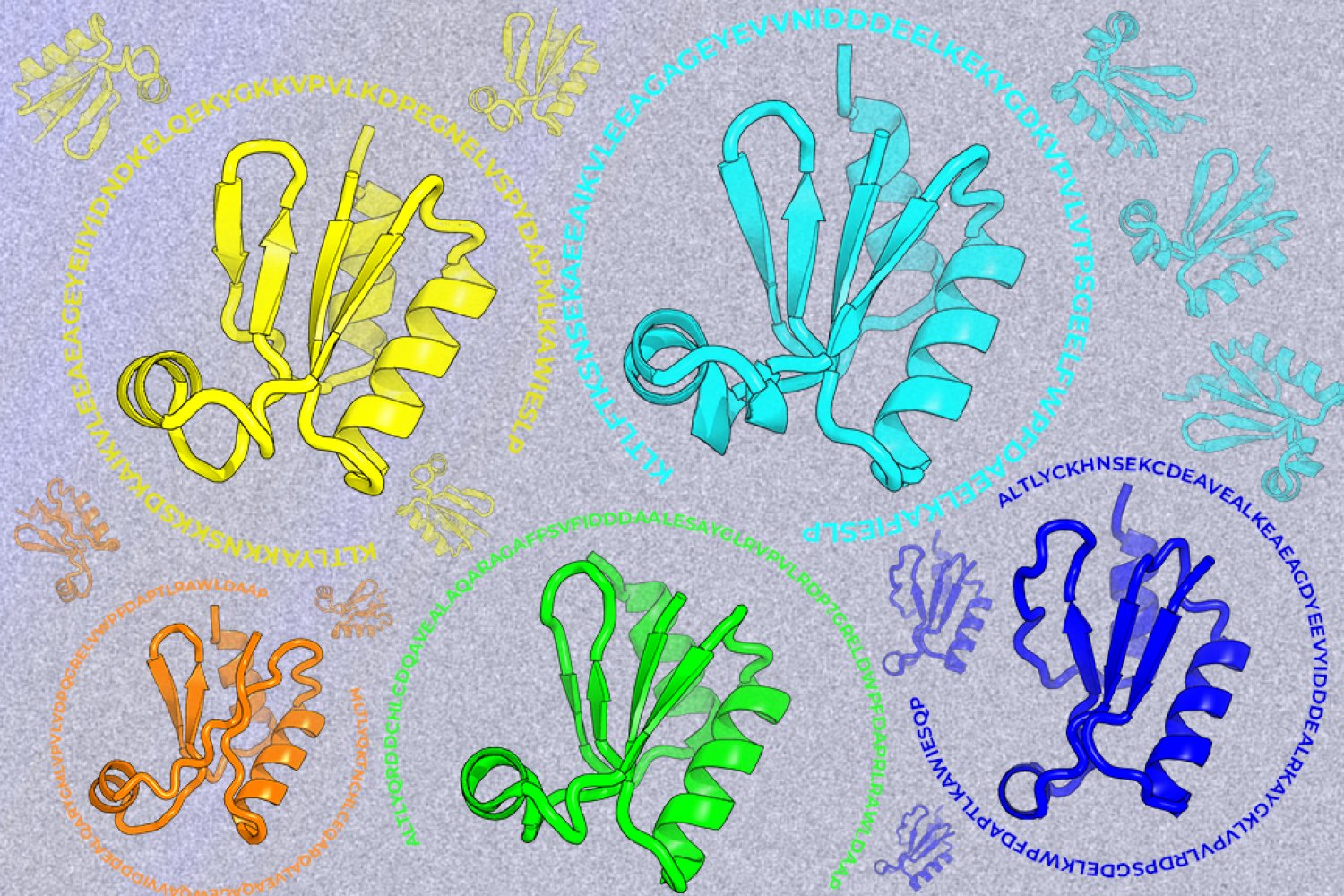
Looking beyond natural sequences

A new machine-learning framework aims to improve the success rate of computational protein design while moving away from results that reproduce sequences found in nature.

Google DeepMind Blog Nov 25, 2025

AlphaFold: Five years of impact

Explore how AlphaFold has accelerated science and fueled a global wave of biological discovery.